Australia Resume Format (AUS): Sections, Length & Tips
The Australia resume format in 2026 emphasises clarity, conciseness, and relevance to the local job market. Understanding the key sections, length expectations, and formatting tips tailored for Australia can help applicants submit ATS-optimised resumes that attract recruiter attention. Whether you are a local professional or an overseas applicant targeting Australian roles, adhering to these standards is critical for landing interviews.
| Australia Resume Norms at a Glance |
|---|
| Length: Usually 2 to 3 pages |
| Key sections: Contact info, Summary, Skills, Experience, Education |
| Photo: Optional but often excluded (not recommended) |
| Paper Size: A4 (210 x 297 mm) |
| Date Format: DD/MM/YYYY |
| File Type: PDF (unless DOCX is explicitly requested) |
What’s Different vs. US Resumes
| Feature | Australia Resume | US Resume |
|---|---|---|
| Length | Typically 2-3 pages | Usually 1 page |
| Photo | Optional, often excluded | Generally excluded |
| Personal Info | Includes city/state but no full address | Typically city/state only |
| Date Format | DD/MM/YYYY | MM/DD/YYYY |
| Language & Spelling | Australian English (e.g., “organise”) | American English |
Australian resumes are often more detailed than US ones but less formal than UK CVs. These differences matter because Australian recruiters expect a certain level of detail—a one-page resume from an experienced professional can look incomplete, while a photo or US spelling can signal a lack of local awareness. Always tailor your document to Australian conventions to make the best first impression. For example, while US resumes often omit a summary, Australian employers expect a targeted professional profile at the top.
Formatting & File Setup (A4, Date Formats)
Getting the technical details right is the first step to an ATS-friendly Australian resume. Here’s what you need to know to ensure your document parses correctly:
- Paper Size: Use A4 format (210 x 297 mm) for all applications in Australia. This is the standard for both digital and printed documents. Using US Letter size can cause formatting shifts when printed locally.
- Font: Stick to clean, professional fonts that are easy for both humans and ATS software to parse. Arial, Calibri, Helvetica, and Times New Roman at 10–12pt are safe choices. For a deeper dive into which fonts perform best in ATS scans, see our Best ATS Resume Fonts guide.
- Margins: Standard 2.5 cm (1 inch) margins on all sides keep your resume looking balanced and ensure nothing gets cut off when printed.
- Date Format: Always use the Australian standard DD/MM/YYYY (e.g., 23/08/2026). For employment dates, a Month Year format (e.g., March 2022 – Present) is also acceptable and can help avoid confusion between US and Australian standards.
- File Type: Submit as a PDF to preserve your formatting across devices. Modern ATS platforms used in Australia (like Workday and Greenhouse) parse clean, text-based PDFs reliably. Only send a DOCX file if the employer specifically requests it. You can export ATS-safe PDFs directly using the ResumeMate AI Resume Builder.
- ATS Compatibility: Many Australian companies use applicant tracking systems (ATS) to screen resumes. To ensure yours passes, avoid tables, text boxes, headers/footers with important info, and graphics. Use simple bullet points and clear, standard section headings like “Work Experience” and “Education.” For pre-tested templates that are built to pass ATS scans, check out our ATS-Friendly Resume Templates.
Essential Sections in an Australian Resume
1. Contact Information
- Full name: Make it stand out; a slightly larger font is fine.
- Phone number: Include country code +61 if applying from overseas.
- Professional email address: Avoid nicknames or outdated domains (e.g., use firstname.lastname@gmail.com).
- LinkedIn URL: Highly recommended—Australian recruiters routinely check profiles to verify experience.
- City and state: e.g., “Sydney, NSW”; no full street address needed for privacy.
- Exclusions: No photo, date of birth, or marital status (see Compliance section below).
2. Professional Summary
A brief, targeted statement (2–4 sentences) that summarises your experience, key skills, and what you bring to the role. Tailor this for every application. This section is your elevator pitch; it should immediately answer why you are a fit for the specific job description. (See the detailed guide below for structure and examples.)
3. Skills
List 6–10 core competencies as bullet points. Include a mix of technical skills (software, tools, certifications) and soft skills (communication, leadership). Mirror the language used in the job ad—this helps with both ATS keyword matching and human readability. For ready-to-use keyword lists organised by job title, visit our ATS Resume Keywords guide. If you are unsure how well your skills section aligns with ATS requirements, you can check your resume’s ATS score free to get section-by-section feedback.
4. Work Experience
- Order: List roles in reverse-chronological order (most recent first).
- Details: For each position, include: job title, company name, location (city/state), and employment dates (month/year).
- Content: Write 3–6 bullet points per role that focus on achievements and results, not just duties. Use numbers wherever possible (e.g., “Increased sales by 20%,” “Managed a team of 12”).
- Context: If the company isn’t well-known in Australia, add a one-line description in brackets (e.g., “a 200-person SaaS company based in Singapore”).
5. Education
Include your degree(s), institution name, and graduation year. If you studied overseas, note the country. You can also add relevant coursework, academic honours, or your GPA/WAM if it’s strong (common for graduate roles). For recent graduates, this section may appear before Work Experience.
6. Additional Sections (Optional)
- Certifications and licences: e.g., White Card, RSA, First Aid, CPA Australia.
- Volunteer work: Highly regarded by Australian employers as it shows community engagement.
- Professional memberships: e.g., Engineers Australia, Australian Marketing Institute.
- Language skills: Specify proficiency level (e.g., Fluent, Conversational).
- Interests: Only include if relevant to the role or company culture (e.g., “Captain of local soccer team” for leadership roles).
Examples/Templates
Professional Summary Example
Detail-oriented financial analyst with 5 years’ experience optimising investment strategies and improving reporting accuracy. Proven track record of increasing portfolio returns by 15%. Seeking to contribute expertise to [Company Name].
Work Experience Example
Marketing Coordinator
XYZ Pty Ltd, Sydney, NSW | 01/03/2022 – Present
- Developed targeted digital campaigns that boosted engagement by 25%.
- Coordinated cross-departmental initiatives that increased lead generation by 15% YoY.
- Managed a budget of $50k for quarterly advertising spend.
Full Resume Structure Example
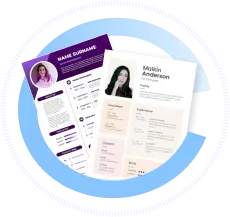
For a visual reference of how these sections come together on an A4 page, you can download free, locally formatted designs from our ATS-friendly resume templates. These templates are designed to meet the 2026 Australian standards discussed above.
How to Write a Strong Australian Professional Summary
The professional summary sits at the top of your Australian resume and is typically the first thing a recruiter reads. Australian employers generally expect a slightly more detailed introduction than what you’d find on a US resume — two to four sentences covering your experience level, core strengths, and what you bring to the specific role.
Structure to follow:
- Years of experience and field: e.g., “Project Manager with 7 years experience…”
- Core skills: e.g., “…specialising in Agile delivery and stakeholder management.”
- Achievement: e.g., “Successfully delivered a $4.2M migration project.”
- Goal: e.g., “Seeking a senior role within a growth-oriented organisation.”
Example for a Project Manager:
Experienced project manager with 7 years delivering infrastructure and IT transformation projects in the financial services sector. Skilled in stakeholder engagement, risk management, and Agile delivery frameworks. Successfully led a $4.2M systems migration project, completing it three weeks ahead of schedule. Seeking a senior PM role within a growth-oriented organisation in Sydney or Melbourne.
Step-by-Step Guide: Building Your Australian Resume
- Set up your document. Use A4 paper size, 2.5 cm margins, and a professional font at 11–12pt. For fonts that have been tested for ATS readability, see our font guide. Save as PDF unless instructed otherwise. If you want a head start, grab one of our ATS-friendly resume templates.
- Write your contact block. Include your full name, phone number, professional email, suburb/city and state, and LinkedIn URL if relevant. Omit your photo and date of birth.
- Write your professional summary. Tailor it to the specific job. Read the job advertisement carefully and mirror key phrases from the position description.
- List key skills. Create a concise skills section using bullet points. Include both technical skills (software, tools, qualifications) and relevant soft skills. Use Australian English spelling throughout. For a head start, check our ATS resume keywords lists to find the right terms for your role.
- Detail your work experience. List roles from most recent to oldest. For each role, include the job title, company name, city and state, and employment period. Write 3–6 bullet points per role focused on achievements with metrics.
- Include a brief company context where needed. If an employer is not well-known in Australia, add a short description (e.g., “a 200-person SaaS company based in Singapore”) to help reviewers understand the scale and context of your work.
- List your education. Include degree name, institution, and graduation year. If you studied overseas, note this clearly.
- Add certifications and licences. Include industry-specific licences (e.g., White Card for construction, RSA for hospitality), completed training programs, and professional development courses.
- Add optional sections. Volunteer work, professional memberships, and community involvement are well-regarded in Australia.
- Proofread for Australian English. Check for spellings like “organise,” “recognise,” “colour,” “programme,” and “centre.”
- Score your resume. Before applying, upload your draft to the Resume Score Checker to ensure it meets ATS readability standards.
Role-Specific Australian Resume Examples
Mining and Resources
For roles in mining, construction, or resources — major employment sectors across Western Australia and Queensland — your resume should prominently list licences and certificates (e.g., White Card, first aid, forklift, HR licence), FIFO availability if applicable, and safety training history. Employers in this sector value a strong safety record and the ability to work in remote, high-pressure environments.
Work Experience Example:
Underground Drill Operator
BHP Nickel West, Kambalda, WA | 03/2021 – Present
- Operated jumbo drill rigs in underground production and development headings.
- Maintained 98% equipment availability rate across 12-hour rotating shifts.
- Completed all mandatory safety refreshers with zero LTIs recorded over 3 years.
Graduate / Entry-Level
Australian graduate resumes may include coursework, academic projects, and internships. It is also common to include your GPA or WAM (Weighted Average Mark) if it is strong. Focus on transferable skills, part-time work, and any leadership roles in university societies.
Summary Example for a Graduate:
Recent marketing graduate from the University of Melbourne with hands-on experience gained through two industry internships in digital marketing and brand strategy. Proficient in Google Analytics, Meta Ads Manager, and Canva. Eager to contribute fresh ideas and data-driven thinking to a forward-thinking marketing team.
Corporate / Office Roles
For administrative, finance, or corporate roles, emphasise software proficiency (e.g., SAP, Xero, Salesforce) and process improvements. Australian corporate culture values collaboration, so highlight team projects.
Work Experience Example:
Office Manager
ABC Solutions, Melbourne, VIC | 06/2020 – Present
- Streamlined office procurement processes, reducing costs by 15% annually.
- Coordinated schedules for a team of 20 executives across multiple time zones.
- Implemented a new digital filing system that improved document retrieval time by 40%.
Common Mistakes in Australian Resumes
- Making it too short. Unlike US resumes, Australian resumes are expected to be 2–3 pages. A one-page resume from an experienced professional may signal that you have omitted important detail. Don’t be afraid to expand on achievements and responsibilities where relevant.
- Using vague bullet points. “Assisted with marketing activities” tells a recruiter very little. Use specific achievements: “Assisted in launching two Instagram campaigns that reached 80,000 users in the first week.”
- Forgetting to tailor for each application. Generic resumes perform poorly in Australia’s competitive job market. Customise your summary, skills, and highlighted experience for each role you apply for. You can find tailored openings on the ResumeMate Job Board.
- Using American English. Spell-check your resume with Australian English settings. Words like “color,” “organize,” and “program” should be “colour,” “organise,” and “programme.”
- Skipping the LinkedIn URL. LinkedIn is widely used by Australian recruiters. Including your profile URL can make a recruiter’s verification step much easier.
- Not contextualising overseas employers. If you have worked for companies that are not well-known in Australia, add a brief one-line description of the organisation to give reviewers context.
- Including a photo or personal details. Unless specifically requested, leave off your photo, date of birth, marital status, and religion. These can introduce unconscious bias and are not expected in Australian applications.
- Using US date formats. Writing 08/23/2026 instead of 23/08/2026 can confuse recruiters and make your resume look less localised.
Compliance and Anti-Bias Notes
Australian anti-discrimination laws strongly discourage the inclusion of personal details that could lead to bias. To keep your application fair and compliant:
- Do not include your date of birth, age, marital status, religion, or a photograph.
- Avoid mentioning your health status, political views, or family situation.
- Focus entirely on your skills, qualifications, and professional achievements.
Recruiters and employers in Australia are trained to assess candidates on merit, so a resume that sticks to professional information is both legally safer and more effective.
FAQ
Q: What is the australia cv format 2026?
A: The Australia CV format for 2026 remains consistent with current standards: A4 paper size, 2–3 pages in length, and clean, ATS-friendly formatting. It should use Australian English spelling, exclude photos, and focus on measurable achievements. Ensure your file is saved as a PDF unless a Word document is explicitly requested.
Q: What is the australian cv and cover letter format?
A: An Australian cover letter should be one page, addressed to a specific person if possible, and complement your resume without repeating it verbatim. It should follow standard business letter formatting with your contact details at the top. Both documents should use A4 size and Australian English spelling conventions.
Q: Where can I find an australia resume format template?
A: You can find free, ATS-optimised Australia resume format templates that are pre-configured for A4 size and local standards on our ATS-friendly resume templates page. Alternatively, you can build one from scratch using the ResumeMate AI Resume Builder.
Q: Can I use an australia resume example for my industry?
A: Yes, but ensure the example matches your seniority level. A graduate example will differ from a senior executive sample. Use examples as a structural guide, but customise the content to reflect your specific achievements and the keywords in your target job description.
Q: Is the australian cv format different from a resume?
A: In Australia, the terms are often used interchangeably for most jobs. However, a “CV” may imply a longer academic document, while a “resume” is the standard 2–3 page professional summary. For corporate roles, the 2–3 page resume format is the norm.
Q: What is the best australia style resume for ATS?
A: The best Australia style resume for ATS uses a simple, single-column layout with standard headings like “Work Experience” and “Education.” Avoid graphics, tables, or text boxes. You can verify your layout’s compatibility by using the Resume Score Checker.
Q: How do I format an australia work history section?
A: List your work history in reverse-chronological order. Include the job title, company name, location, and dates (Month Year). Use bullet points to describe achievements, starting with action verbs and including metrics where possible.
Q: How long should an australian resume be?
A: For most professionals, an Australian resume should be 2 to 3 pages. This allows enough space to detail achievements and responsibilities without overwhelming the reader. Recent graduates or those with less than 5 years of experience can often fit everything onto 1–2 pages.
Q: Should I include a photo on my australian resume?
A: No, it is generally not recommended to include a photo on an Australian resume. Photos can introduce unconscious bias and are not expected by Australian employers. Focus on your skills, experience, and achievements instead.
Q: What file format should I use for my australian resume?
A: Always submit your Australian resume as a PDF to preserve formatting. Modern ATS platforms parse clean, text-based PDFs reliably. Only use DOCX if the employer specifically requests it.
Q: Do I need to include my full address on an australian resume?
A: No, you only need to include your city and state (e.g., “Sydney, NSW”). Including your full street address is unnecessary and can raise privacy concerns.
Q: What is the difference between an australian resume and a US resume?
A: The main differences are length (2–3 pages vs. 1 page), date format (DD/MM/YYYY vs. MM/DD/YYYY), and spelling (Australian English vs. American English). Australian resumes also tend to be more detailed and may include a professional summary, which is less common on US resumes.
Related articles:
- Older Workers Resume Tips: Stand Out, Don’t Hide
- Canadian Resume Format: Sections, Length, and Tips for 2025
Build, Score & Track Your Job Search with ResumeMate
Resume Builder → — Create an ATS-ready resume in minutes. Free to use, exports clean PDFs.
Resume Score Checker → — See how your resume scores against ATS systems instantly. Get section-by-section feedback.
Job Board → — Browse jobs matched to your resume. Filter by role, location, and remote options.
Job Tracker Chrome Extension → — Track every application, deadline, and follow-up in one place — free.