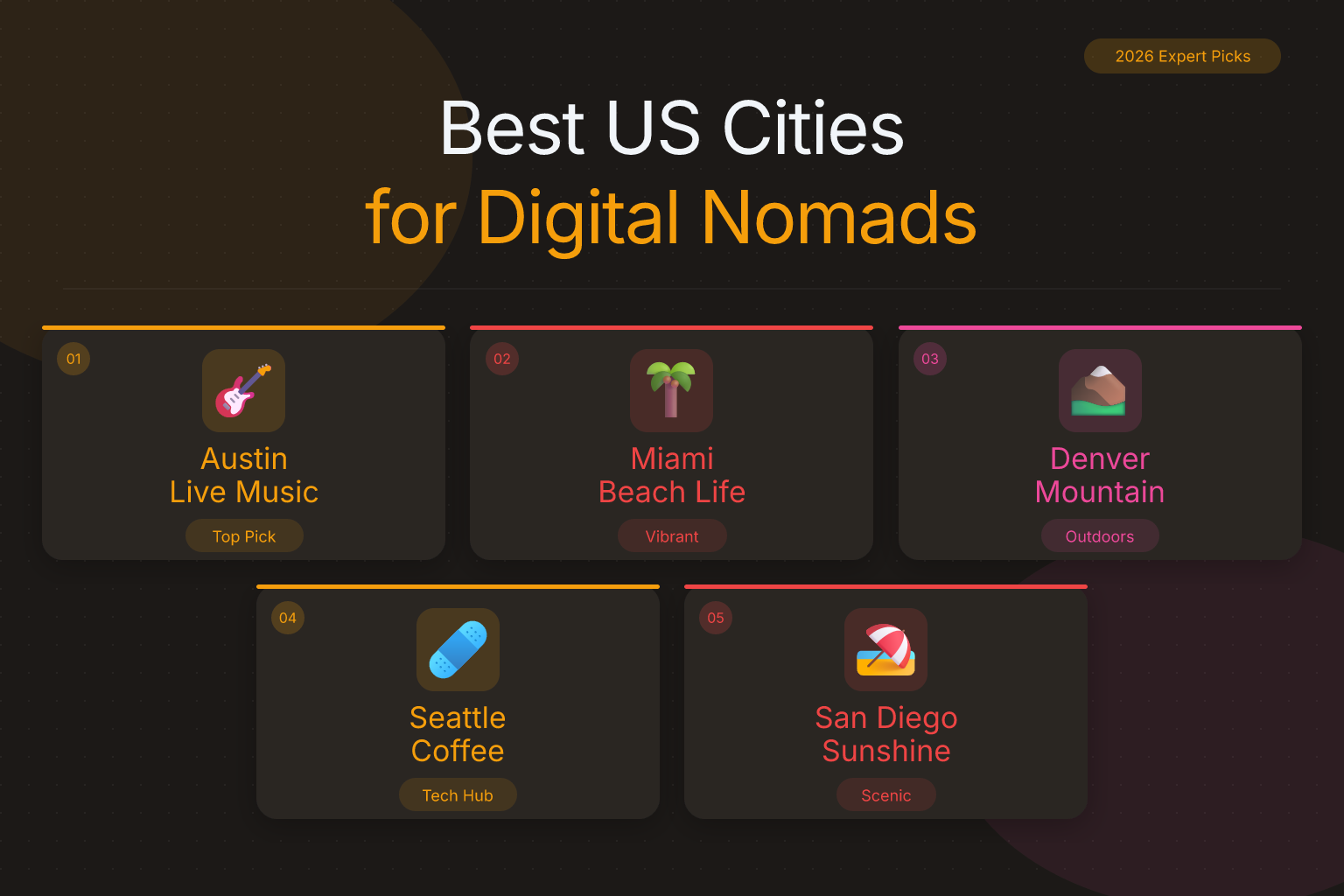
Best US Cities for Digital Nomads in 2026: Expert Picks and Rankings
Choosing the right city can make or break your remote work experience. The best US cities for digital nomads offer fast internet, affordable living, and a community that gets your lifestyle. This guide covers the top cities in 2026, how to evaluate them, and how to keep your job search organized while you explore.
| What to Do | Why It Matters | Time |
|---|---|---|
| Research cost of living and internet speeds | Ensures you can afford the lifestyle and stay productive | 1–2 weeks |
| Join local nomad communities before moving | Builds a support network and reduces isolation | Ongoing |
| Tailor your resume for remote roles | Increases your chances of landing location-independent work | 2–3 hours per application |
| Use a job tracker to manage applications | Keeps you organized across multiple opportunities | 5 minutes per application |
What Makes a City Great for Digital Nomads?
A true nomad hub balances affordability, connectivity, and community. Key factors:
- Cost of living. Rent, groceries, and transportation should leave room for travel and savings. Use Numbeo or Expatistan to compare real-world costs. In 2026, a comfortable monthly budget for a single nomad in a mid-tier US city ranges from $2,500 to $3,500, including a private apartment, coworking membership, and dining out a few times a week.
- Internet speed and reliability. Aim for at least 25 Mbps download and 5 Mbps upload; 50+ Mbps is safer for video calls and large file transfers. Check Ookla’s Speedtest map and ask locals in Facebook groups about real-world performance in specific buildings—a building with fiber can be night-and-day different from one stuck on DSL.
- Coworking spaces and cafés. A strong coworking scene (50+ spaces) signals a city that supports remote workers. Look for day passes, 24/7 access, and community events. Many spaces offer free trial days—use them to test noise levels, chair comfort, and the crowd before committing.
- Nomad community. Active Facebook groups, Slack channels, and regular meetups turn a city into a home. They provide accountability, skill-sharing, and friends. Cities with at least one weekly nomad meetup tend to have the stickiest communities.
- Time zone alignment. If your clients are on the East Coast, living in Mountain or Pacific time means early mornings. Factor this into your daily schedule. Some nomads prefer this—finishing work by 2 p.m. frees up afternoons for exploration.
- Safety and walkability. Low crime, good public transit, and walkable neighborhoods reduce daily stress. Check Walk Score and area-specific crime maps before signing a lease.
- Healthcare access. As a nomad, you need flexibility. Look for cities with strong telehealth options, urgent care clinics, and PPO plans with national networks. If you’re staying long-term, research primary care doctors who accept your insurance.
- Visa and legal considerations. US citizens need no visa. International nomads should consult an immigration attorney; the B-1/B-2 visitor visa generally doesn’t permit remote work for a US employer.
- Housing flexibility. The best nomad cities offer more than just traditional apartments. Look for a mix of short-term rentals, co-living spaces (Common, Outsite), and apartment-style hotels (Sonder, Mint House) that provide kitchenettes, fast Wi‑Fi, and dedicated workspaces. These are especially popular among nomads who want hotel amenities with apartment living.
Top 10 US Cities for Digital Nomads in 2026
These cities balance cost, connectivity, and community. Rankings are based on data from Nomad List, Numbeo, and Ookla, plus firsthand reports.
1. Austin, Texas
Best for: Tech nomads, live music lovers, and those seeking a large, active community.
Median download speeds exceed 120 Mbps, and over 100 coworking spaces dot the city—from downtown staples like Capital Factory and WeWork to neighborhood spots in East Austin. A one‑bedroom apartment averages $1,800/month, and while the overall cost of living is about 5% above the national average, no state income tax helps. The nomad community is massive: the Austin Digital Nomads Facebook group (10,000+ members) organizes weekly coworking sessions, happy hours, and skill‑shares. South Congress and East 6th offer walkable neighborhoods with coffee shops that double as informal offices. For a more residential vibe, check out the Mueller district—it’s bike‑friendly and has Google Fiber.
2. Denver, Colorado
Best for: Outdoor enthusiasts who want 300 days of sunshine and mountain access.
Internet averages 90 Mbps, and coworking spaces cluster in RiNo (Industry, Green Spaces) and LoDo (WeWork, Galvanize). Rent for a one‑bedroom runs about $1,900, roughly 15% above the national average, but the lifestyle payoff is huge. The Denver Digital Nomads Facebook group (5,000+ members) organizes hikes, coworking days, and ski trips. For a more affordable base, consider nearby suburbs like Lakewood or Aurora, which still offer solid internet and easy light‑rail access to downtown. Denver’s central location also makes it a great hub for exploring the Rockies on weekends.
3. Portland, Oregon
Best for: Creatives, freelancers, and those who value a quirky, community‑driven culture.
Portland’s creative scene attracts freelancers. Internet speeds are 80–100 Mbps, and independent coffee shops welcome laptop workers. Cost of living is ~10% above average, but no sales tax softens the blow. The Portland Remote Workers group runs regular co‑working meetups, and neighborhoods like Alberta Arts and Hawthorne are packed with walkable amenities. Rainy winters are the trade‑off; a good rain jacket and a cozy café habit are essential. For coworking, check out CENTRL Office or WeWork Pioneer Place—both offer day passes and strong community calendars.
4. Miami, Florida
Best for: International nomads, crypto/tech workers, and sun‑seekers.
A growing tech and crypto hub with warm weather and Latin American ties. Internet averages 90 Mbps; coworking spaces in Wynwood (The LAB Miami) and Brickell (WeWork, Quest Workspaces) offer ocean views. Rent is ~20% above average, with one‑bedrooms around $2,200, but no state income tax and a vibrant international community are draws. The Miami Remote Workers group hosts beach meetups and networking events. Spanish speakers will find an especially welcoming environment. For a more affordable stay, look at neighborhoods like Little Havana or Edgewater, which are still close to the action.
5. Nashville, Tennessee
Best for: Music lovers, creatives, and nomads who want a lower cost of living without sacrificing culture.
Cost of living is ~5% below average, and Google Fiber is expanding. Coworking spaces are growing in East Nashville (The Skillery) and The Gulch (WeWork). The nomad scene is tight‑knit, with a monthly “Junto” meetup for remote workers. Internet speeds are solid (80–100 Mbps), and the city’s central time zone works well for both coasts. Short‑term rentals are plentiful, and the food scene is a bonus. A one‑bedroom averages $1,500, making it one of the most affordable creative hubs on this list.
6. Salt Lake City, Utah
Best for: Budget‑conscious nomads who love the outdoors.
Affordability (~8% below average) and fast internet (Google Fiber, municipal networks push speeds past 100 Mbps). Coworking spaces downtown (Impact Hub, Church & State) and in Sugar House. Unmatched outdoor access—ski slopes 30 minutes away. The SLC Digital Nomads group hosts weekly coworking and adventures. The airport is a Delta hub, making weekend trips easy. Rent for a one‑bedroom averages $1,300, and the city’s grid system makes it easy to navigate without a car.
7. San Diego, California
Best for: Higher‑income nomads who prioritize weather and beach lifestyle.
Perfect weather, but cost of living is ~30% above average. Internet averages 85 Mbps, and coworking spaces are plentiful in North Park (Union Cowork) and downtown (WeWork, DeskHub). Active nomad community with beach meetups. If you can stomach the rent (one‑bedrooms around $2,500), the quality of life is hard to beat. Consider roommates or co‑living spaces like Outsite to cut costs. The Gaslamp Quarter and Little Italy are walkable and full of laptop‑friendly cafés.
8. Seattle, Washington
Best for: Tech workers, coffee aficionados, and those who don’t mind gray winters.
Tech roots mean internet speeds often 150+ Mbps. Coworking spaces everywhere—WeWork, The Riveter, and Impact Hub are popular. Rent is ~25% above average (one‑bedroom ~$2,100), and winters are gray, but no state income tax and a strong coffee culture. The Seattle Remote Workers Slack group is a great resource. Neighborhoods like Capitol Hill and Fremont offer walkable, laptop‑friendly cafés. For a quieter base, consider Ballard or West Seattle, both with good transit connections.
9. Chicago, Illinois
Best for: Nomads who want big‑city amenities at a relatively reasonable price.
Big‑city amenities at ~5% above average cost. Reliable internet (90–100 Mbps) and coworking spaces in Logan Square (The Co‑Lab), West Loop (WeWork), and Hyde Park. Growing nomad community with Meetup.com events. Cold winters, but summer festivals and lakefront access compensate. The L train makes it easy to live car‑free. A one‑bedroom averages $1,800, and neighborhoods like Wicker Park and Pilsen offer vibrant, walkable lifestyles.
10. Phoenix, Arizona
Best for: Snowbirds, sun‑lovers, and those who can handle extreme summers.
Cost of living near the national average; internet speeds 80–100 Mbps. Coworking spaces in downtown (CO+HOOTS) and Tempe (Gangplank). Intense summer heat, but mild winters attract snowbirds. The Phoenix Remote Workers group hosts monthly coworking days. For a more walkable vibe, look at Tempe or Scottsdale’s Old Town. Rent for a one‑bedroom averages $1,400, making it a solid budget pick with plenty of sunshine.
Budget‑Friendly Picks for Digital Nomads
If keeping costs low is your top priority, these three cities from the list stand out:
- Salt Lake City, UT – ~8% below national average, fast internet, and easy access to nature. One‑bedroom rent ~$1,300.
- Nashville, TN – ~5% below average, growing coworking scene, and no state income tax. One‑bedroom rent ~$1,500.
- Phoenix, AZ – Near the national average, mild winters, and a solid remote worker community. One‑bedroom rent ~$1,400.
All three offer reliable internet, active nomad groups, and a cost of living that leaves room for travel and savings.
How to Evaluate a City for Your Nomad Lifestyle
Before you move, run a personal audit:
- Check cost of living on Numbeo. Compare rent, utilities, groceries, and one‑time costs like deposits. Don’t forget to factor in coworking membership fees ($200–$400/month in most cities) and health insurance.
- Test internet speeds. Use Ookla’s map and ask local nomad groups about real‑world reliability in specific buildings. If you’re booking an Airbnb, message the host to run a speed test and send a screenshot.
- Visit for a trial period. Spend 2–4 weeks working from different coworking spaces and cafés to test connectivity and noise. Many spaces offer day passes for $20–$30; try a few before committing to a monthly plan.
- Join online communities in advance. Introduce yourself in the city’s Slack or Facebook group to get neighborhood tips and make contacts. A simple “Hey, I’m moving to [city] next month—any tips on neighborhoods with good coffee shops?” often yields gold.
- Map your daily routine. Ensure a walkable neighborhood with amenities within 15 minutes. Use Google Maps to check distances to grocery stores, gyms, and your top coworking picks.
- Research healthcare options. Find an urgent care clinic and a telehealth provider that operates in the state. If you have ongoing prescriptions, confirm you can transfer them to a local pharmacy.
- Explore short‑term housing beyond Airbnb. Look for co‑living spaces (Outsite, Common) and apartment‑style hotels (Sonder, Mint House) that cater to remote workers with fast Wi‑Fi and desks. For budget stays, hostels like HI USA in major cities often have coworking lounges and social events—ideal for meeting other nomads.
Remote Job Hunting While on the Move
A great city means little without income. Finding location‑independent work requires strategy:
- Use specialized job boards. Niche boards surface higher‑quality remote roles. Our guide to the 100 best remote job websites covers platforms for tech, creative, and freelance work. You can also browse the ResumeMate job board for filtered remote openings. If you’re targeting a specific role, our business analyst jobs guide highlights remote‑friendly companies and skills, while the AWS jobs guide covers cloud roles that are often location‑independent.
- Network in nomad hubs. Attend coworking events and local meetups. Many remote jobs come through referrals. Bring business cards or a digital link to your portfolio.
- Tailor every application. Highlight remote‑specific skills like asynchronous communication, self‑management, and tool proficiency (Slack, Zoom, Notion). Use the job description’s language to show you’ve read it carefully.
- Track your applications. When applying to multiple roles, it’s easy to lose track. The ResumeMate Job Tracker Chrome extension logs every application, deadline, and follow‑up in one place—so you can focus on exploring your new city without dropping the ball.
- Negotiate your offer. Once you land a remote job, don’t leave money on the table. Use our guide on how to ask for a signing bonus to boost your relocation or setup fund—many companies are open to it, especially for hard‑to‑fill remote roles.
Building a Nomad‑Friendly Resume
Recruiters for remote roles look for specific signals. For a deep dive, see our remote resume guide. Key tips:
- Lead with a remote‑ready summary. Mention years of remote experience, time zone flexibility, and key tools.
- Highlight remote achievements. Instead of “Managed a team,” write “Managed a distributed team of 8 across 4 time zones, increasing delivery speed by 20%.”
- Use a clean, ATS‑friendly format. Single‑column layout, standard fonts. Run your resume through the free ResumeMate score checker to see how an ATS interprets it—and fix any parsing issues before you hit submit.
- Include a “Remote Work” section if you’ve held multiple remote roles to make the pattern obvious.
Staying Productive and Connected
Even in a nomad‑friendly city, productivity requires systems:
- Invest in a coworking membership. Monthly plans with reliable Wi‑Fi and ergonomic setups pay for themselves. Many spaces offer 24/7 access—ideal if you work odd hours.
- Carry a backup internet solution. A mobile hotspot or generous tethering plan saves you when café Wi‑Fi fails. Consider a plan with at least 15–20 GB of hotspot data.
- Set a daily schedule. Block time for deep work, meetings, and exploration. Use Google Calendar’s world clock to avoid time zone mistakes.
- Prioritize ergonomics. A portable laptop stand, external keyboard, and mouse turn any surface into a workstation.
- Keep your job search organized. While you’re hopping between cafés and coworking spaces, the ResumeMate Job Tracker ensures you never miss a follow‑up or deadline—even when you’re on the move.
Navigating Taxes and Legalities
Moving between states complicates taxes. Read our digital nomad tax guide for full details. Essentials:
- State tax residency. If you maintain a permanent home in one state, you’re typically a resident there. States with no income tax simplify things if you establish domicile. The nine states with zero state income tax are: Texas, Florida, Tennessee, Nevada, Washington, South Dakota, Wyoming, Alaska, and New Hampshire (though New Hampshire taxes interest and dividends). Establishing residency in one of these can save thousands annually.
- Temporary work in other states. Some states tax income earned while you’re physically present. Keep a daily log of where you work and consult a multi‑state tax professional.
- Virtual mailboxes. Services like iPostal1 give you a stable address for business registration and client contracts. Choose an address in a tax‑friendly state if it will be your domicile.
- Health insurance. Look for PPO plans with national networks or short‑term plans to bridge gaps. If you’re moving frequently, a plan that covers telehealth across state lines is a must.
Community and Networking in Nomad Hubs
Isolation is a top challenge. The best cities have built‑in solutions:
- Attend coworking space events. Weekly happy hours, skillshares, and pitch nights are low‑pressure ways to meet people. Many spaces post their event calendars on Instagram or their website.
- Join city‑specific digital nomad groups. Search Facebook, Slack, and Discord for “[City] Digital Nomads.” Introduce yourself and offer to grab coffee. A simple post like “New in town—anyone up for a coworking session this week?” often gets quick replies.
- Use Meetup.com and Eventbrite. Filter for “remote work,” “freelance,” or “entrepreneurship” events. Many cities have recurring coworking sessions.
- Volunteer or take a class. A weekly improv class or community garden shift connects you with locals and nomads outside work.
- Co‑living spaces. In cities like Austin, Miami, and Denver, co‑living companies offer furnished rooms with built‑in community events. They’re pricier than a solo apartment but jumpstart your social life.
- Stay in a nomad‑friendly hostel. Hostels like HI USA locations in New York, San Francisco, and Chicago often have coworking lounges, free Wi‑Fi, and organized social events—perfect for meeting other remote workers on a budget.
FAQ
Q: What are the best US cities for digital nomads in 2026?
A: Austin, Denver, Portland, Miami, Nashville, Salt Lake City, San Diego, Seattle, Chicago, and Phoenix top the list. They balance cost of living, fast internet, strong coworking scenes, and active nomad communities. The right pick depends on your budget, climate preference, and work style.
Q: Which US cities have the best coworking spaces for digital nomads?
A: Austin (over 100 spaces), Denver (clusters in RiNo and LoDo), Miami (Wynwood and Brickell), and Seattle (tech‑driven, spaces everywhere) lead in quantity and quality. Many offer day passes, 24/7 access, and regular networking events.
Q: Is Nashville a good city for digital nomads?
A: Yes. Nashville’s cost of living is about 5% below the national average, Google Fiber is expanding, and the nomad community is tight‑knit with monthly meetups. It’s especially appealing for music lovers and creatives who want a lower‑cost alternative to Austin.
Q: What states have zero state income tax?
A: Nine states: Texas, Florida, Tennessee, Nevada, Washington, South Dakota, Wyoming, Alaska, and New Hampshire (though New Hampshire taxes interest and dividends). Establishing residency in one of these can significantly reduce your tax burden as a nomad.
Q: What is the best coworking day pass for digital nomads in America?
A: There’s no single “best” pass—it depends on the city. Many independent spaces offer day passes for $20–$30. National networks like Deskpass and Croissant (in select cities) let you access multiple spaces with one membership. Always check if a space offers a free trial day before buying a pass.
Q: How can I digital nomad in the USA as a foreigner?
A: The US does not have a dedicated digital nomad visa. Most international nomads enter on a B‑1/B‑2 visitor visa, which generally does not permit remote work for a US employer. Consult an immigration attorney before planning a long‑term stay. Some nomads use the visa for short exploratory trips while working for foreign clients.
Q: What are the best places to live for remote workers?
A: The same cities that work for digital nomads often work for remote workers with a fixed home base. Look for strong internet, a reasonable cost of living, and a community of like‑minded professionals. Austin, Denver, and Nashville are popular for their balance of career opportunities and lifestyle.
Q: How do I find short‑term housing?
A: Use Airbnb for monthly stays, Furnished Finder for professionals, and local Facebook housing groups. Always ask about internet speed and a dedicated workspace before booking. For stays longer than a month, negotiate directly with hosts for a discount. Also consider co‑living spaces (Outsite, Common) and apartment‑style hotels (Sonder, Mint House) that cater to remote workers.
Q: What internet speed is sufficient?
A: Aim for at least 25 Mbps download and 5 Mbps upload. For large files or streaming, 50+ Mbps is safer. Consistency matters more than raw speed—check real‑world reports from nomads in the area.
Q: Do I need a US address for my remote job?
A: Many employers require a permanent address for payroll. A virtual mailbox with a physical street address satisfies this. Choose one that can forward or scan mail, and consider an address in a state with no income tax if it aligns with your residency plans.
Q: How do I meet other digital nomads in a new city?
A: Join the city’s nomad Facebook group or Slack before arriving. Attend a coworking space’s weekly social event your first week. Post a short introduction offering to meet for coffee—most communities are welcoming.
Q: Which US cities are best for digital nomads on a budget?
A: Salt Lake City, Nashville, and Phoenix offer the best combination of low cost of living, fast internet, and active nomad communities. All three have average one‑bedroom rents under $1,500 and no state income tax (Tennessee) or below‑average costs. They’re ideal if you want to keep monthly expenses under $2,500.
Q: Are there apartment‑style hotels popular among digital nomads in the United States?
A: Yes. Brands like Sonder, Mint House, and Stay Alfred offer apartment‑style accommodations with full kitchens, fast Wi‑Fi, and dedicated workspaces. They’re popular in cities like Austin, Miami, and Denver because they combine hotel amenities (cleaning, 24/7 support) with the space and privacy of an apartment. Many nomads use them for stays of a week to a few months.
Q: What are the best hostels for digital nomads in the USA?
A: HI USA hostels in major cities (New York, San Francisco, Chicago, Boston) often feature coworking lounges, free Wi‑Fi, and organized social events. Other nomad‑friendly options include The Local NYC in Queens and Freehand hotels in Chicago and Miami, which blend hostel dorms with hotel‑style amenities and communal workspaces. They’re great for budget‑conscious nomads who want to meet people.
Q: What are the best states for digital nomads?
A: States with no income tax—Texas, Florida, Tennessee, Nevada, Washington, South Dakota, Wyoming, Alaska, and New Hampshire—are top picks for tax savings. Beyond taxes, states like Colorado, Utah, and Oregon attract nomads with outdoor access and strong remote‑work communities. The “best” state depends on your priorities: taxes, climate, or community.
Q: What is the best city for remote workers in 2026?
A: There’s no one‑size‑fits‑all answer, but Austin consistently ranks highest for its massive nomad community, 100+ coworking spaces, and no state income tax. Denver and Nashville are close seconds, offering strong job markets and lifestyle perks. Choose based on your budget, weather tolerance, and the type of community you want.
Related articles:
Track Every Application While You Job Hunt
Stop losing track of where you’ve applied. The ResumeMate Job Tracker is a free Chrome extension that tracks every application, deadline, and follow‑up in one place — right from your browser.