Entry Level Project Manager Resume with No Experience
You can absolutely land a job as an entry level project manager with no experience — if you know how to package what you’ve already done. Hiring managers for junior PM roles aren’t looking for someone who’s led a $2M software launch. They’re looking for organization, communication, and the ability to get things done. Your resume’s job is to prove you have those traits, even if you’ve never held the title “Project Manager.”
Key Takeaways
- You can build a strong entry-level project manager resume by reframing academic projects, volunteer work, internships, and part-time jobs as project management experience.
- A hybrid resume format works best: it leads with skills and relevant projects while still including a concise work history.
- Quantify everything — number of team members, budget managed, deadlines met, or percentage improvements — to show you deliver results, not just complete tasks.
- Adding a certification like CAPM or Google Project Management can significantly boost your credibility when you lack direct job experience.
- Tailor each resume to the job description by mirroring keywords; this helps you pass both ATS filters and recruiter skims.
Summary Table
| What to Do | Why It Matters | Time |
|---|---|---|
| Use a skills-first (hybrid) resume format | Puts your project management abilities front and center, not your lack of job titles | 1–2 hours to restructure |
| Reframe academic, volunteer, and internship experiences as projects | Shows you’ve managed timelines, budgets, or teams in real situations | 30–60 minutes to rewrite bullet points |
| Add a dedicated certifications section | Demonstrates formal knowledge of methodologies (Agile, Waterfall) and tools | Varies (study time for exam) |
| Quantify results with numbers and percentages | Proves you can deliver outcomes, which is what project managers are hired to do | 20–30 minutes to add metrics |
| Customize for each job application | Matches your resume to the job description, increasing ATS and recruiter appeal | 15–20 minutes per application |
How to Write an Entry Level Project Manager Resume with No Experience
Writing a resume for an entry level project manager role when you have no direct experience feels like a catch-22. But the truth is, you’ve been managing projects your whole life — you just haven’t called it that. The key is to translate your existing experiences into the language of project management.
Start by listing every activity where you planned, organized, or led something. That includes group projects in college, organizing a fundraiser for a club, coordinating schedules for a part-time job, or even planning a family event. Then, for each one, identify the project management elements: scope (what needed to be done), timeline (deadlines), resources (people, money, tools), and outcome (what was achieved).
Once you have that list, you’ll structure your resume to lead with those transferable skills rather than a traditional chronological work history. This approach — often called a functional or hybrid resume — is exactly what hiring managers for junior PM roles expect to see from candidates without a PM background. To save time and ensure a clean, ATS-friendly layout, you can use a free AI resume builder that formats your content into a professional template in minutes.
What Does an Entry-Level Project Manager Do?
Before you write your resume, you need to understand what the job actually involves. Entry-level project management roles go by many names: Project Coordinator, Junior Project Manager, Associate Project Manager, Project Assistant, or even Operations Coordinator. These positions support senior project managers by handling scheduling, documentation, status updates, and small workstreams.
Common responsibilities include:
- Maintaining project plans and timelines
- Scheduling meetings and taking minutes
- Tracking action items and following up with team members
- Updating project management software (Jira, Asana, Trello, Monday.com)
- Preparing status reports for stakeholders
- Assisting with budget tracking and resource allocation
Is project manager an entry-level job? Not typically. Most project managers work their way up from coordinator or specialist roles. However, many companies now offer structured development programs or associate PM positions designed for new graduates. These roles assume you’ll learn on the job, so they prioritize soft skills and potential over years of experience. Your resume should reflect that you’re ready to step into that learning curve.
Resume Format: Functional vs. Hybrid for No Experience
When you have no direct project management experience, a chronological resume that lists your part-time retail or food service jobs first will bury your relevant skills. Instead, use a hybrid format that leads with a “Relevant Experience” or “Projects” section, followed by a condensed work history.
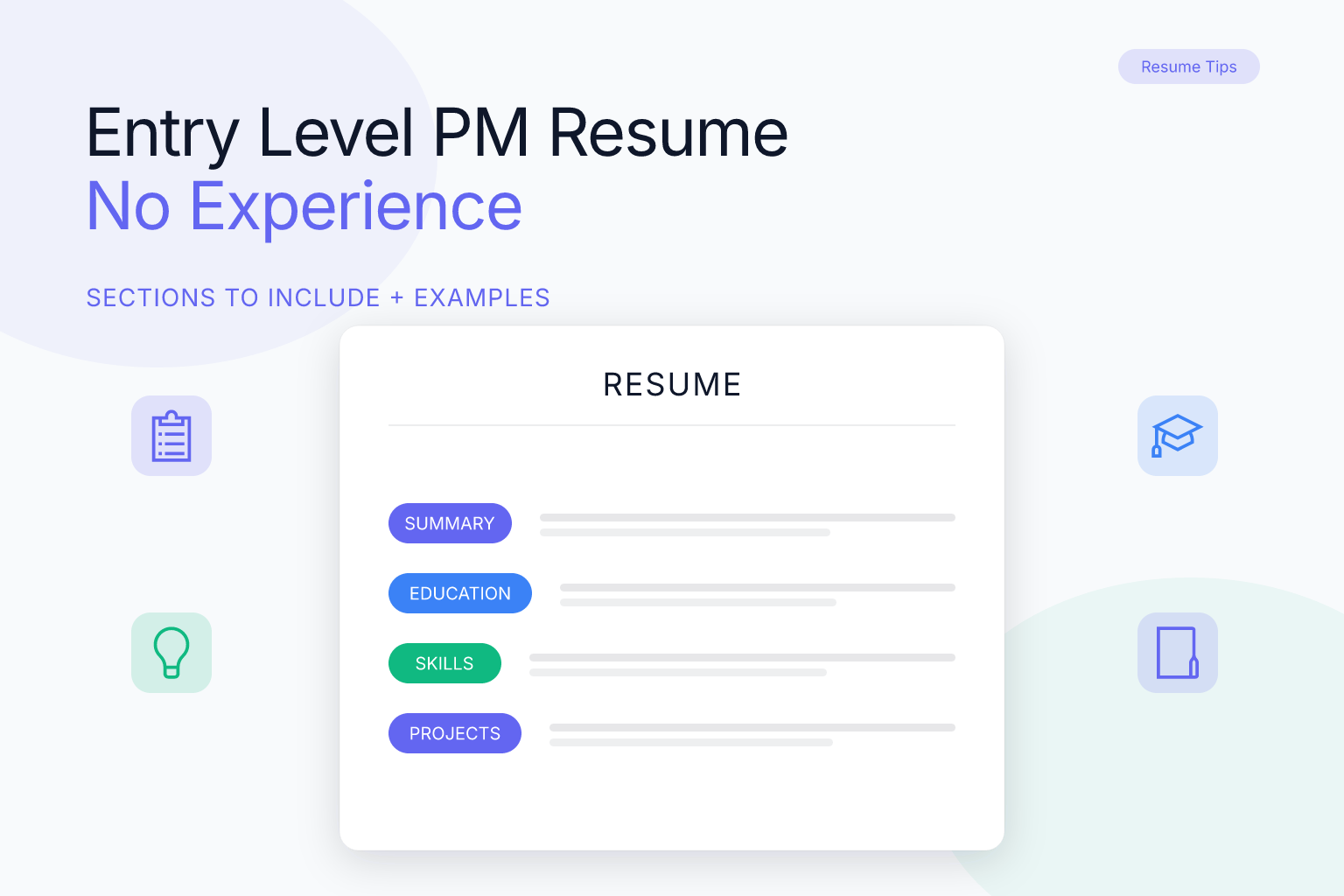
Here’s a recommended structure:
- Contact Information
- Professional Summary (2–3 sentences)
- Core Competencies (6–8 bullet points of skills)
- Relevant Projects & Experience (academic, volunteer, freelance)
- Work History (brief, with only transferable bullet points)
- Education
- Certifications
- Technical Skills (tools and software)
This format immediately shows a recruiter that you have project management capabilities, even if your job titles don’t say “Project Manager.” For more on structuring a resume when you’re light on experience, see our guide on how to write a resume with no experience for a first job.
Crafting a Compelling Resume Summary
Your summary sits at the top of the page and needs to hook the reader in seconds. Avoid generic statements like “Hardworking individual seeking a challenging position.” Instead, write a summary that names the role, highlights your most relevant strengths, and shows you understand what the job requires.
Example for a recent graduate:
“Detail-oriented business graduate with hands-on experience leading academic team projects and coordinating volunteer events. Skilled in timeline management, stakeholder communication, and Agile basics. Seeking to leverage organizational and leadership abilities as a Project Coordinator at XYZ Company.”
If you’re changing careers, your summary should bridge your past role to project management. For example, someone moving from administrative work might write:
“Administrative professional with 3 years of experience coordinating schedules, managing vendor relationships, and supporting cross-functional teams. Recently completed the Google Project Management Certificate and eager to transition into a formal project coordination role.”
For more examples of summaries that pivot into a new field, check out our post on how to write a career change resume summary with no experience.
Highlighting Transferable Skills and Experiences
This is the most important section of your resume. You’ll create a “Relevant Projects & Experience” area where you describe 3–5 projects that demonstrate project management competencies. These can come from:
- Academic group projects: Did you lead a capstone project, coordinate a research team, or manage a class presentation? Describe the scope, your role, and the result.
- Volunteer work: Organizing a charity event, managing a community cleanup, or running a club’s social media campaign all involve project management. Learn how to present these effectively in our guide on how to list volunteer work on a resume with no experience.
- Internships: Even if your internship wasn’t in project management, you likely supported projects. Frame your contributions around the project lifecycle. See our resume for internship with no experience post for more ideas.
- Part-time jobs: Managing a shift at a restaurant, training new hires, or handling inventory are all mini-projects. Use project language: “Led team of 5 during dinner service, ensuring on-time order delivery and resolving customer issues — 98% satisfaction rate.”
Even if your background is in a completely different field, the same reframing principles apply. For instance, an accountant who managed client audits or an actor who coordinated rehearsals can present those as project management experiences. Check out our guides on accountant resume examples with CPA and GAAP skills and acting role on resume: how to list interim titles for more ideas on translating non-traditional roles into project language.
For each entry, use the CAR method (Challenge, Action, Result) or simply start with a strong action verb and include numbers. Examples:
- “Coordinated a 6-person team to deliver a marketing campaign for a campus event, resulting in 40% higher attendance than the previous year.”
- “Managed a $500 budget for a student club fundraiser, negotiating vendor discounts and tracking expenses in Excel, coming in 10% under budget.”
- “Created and maintained a project timeline in Trello for a website redesign, ensuring all milestones were met 2 days ahead of schedule.”
Education and Certifications That Boost Your Resume
Your education section should go beyond listing your degree. Include relevant coursework, academic honors, and any project-based classes. For example:
Bachelor of Science in Business Administration
University of State, May 2025
Relevant Coursework: Project Management, Operations Management, Data Analysis, Organizational Behavior
If your GPA is above 3.5, include it. If you held leadership roles in student organizations, list them here or in a separate “Leadership” section. If you’re still in school or recently graduated, see our accounting resume examples for landing your first internship for tips on presenting internship experience that can be adapted to project management.
Certifications can be a game-changer when you have no experience. They show you’ve invested time in learning project management methodologies and tools. The most recognized entry-level certifications are:
- Certified Associate in Project Management (CAPM) from PMI — requires 23 hours of project management education and passing an exam.
- Google Project Management Certificate — a 6-month, self-paced program on Coursera that covers Agile, Scrum, and real-world scenarios.
- Scrum Master certifications (CSM or PSM) — valuable if you’re targeting tech or Agile environments.
List certifications in their own section, including the issuing organization and date. If you’re currently pursuing one, write “In Progress” with an expected completion date.
For more on how to position your education depending on your experience level, read our guide on what to include in the education section of a resume.
Showcasing Academic and Personal Projects
If you don’t have work experience to draw from, create a dedicated “Projects” section. This can include class assignments, personal initiatives, or freelance work. Treat each project like a job entry: give it a name, your role, and bullet points describing what you accomplished.
Example:
Website Redesign for Local Nonprofit
Project Lead | Jan 2026 – Mar 2026
- Led a team of 4 volunteers to redesign the organization’s WordPress site, improving mobile responsiveness and page load speed by 35%.
- Defined project scope, created a timeline in Asana, and facilitated weekly standups to track progress.
- Communicated with the nonprofit’s board to gather requirements and present deliverables, resulting in a 20% increase in online donations within the first month.
This entry reads like a professional project manager’s bullet points. It shows leadership, tool proficiency, stakeholder communication, and measurable results — exactly what hiring managers want to see.
If you’re looking for more examples of how to structure project-based resumes, our project manager resume examples for Agile and Waterfall post can give you additional ideas, even though it’s aimed at experienced PMs.
Tailoring Your Resume for Applicant Tracking Systems (ATS)
Most companies use ATS software to filter resumes before a human ever sees them. To get past these systems, you must include keywords from the job description. For entry-level project manager roles, common keywords include:
- Project coordination, scheduling, status reports
- Stakeholder communication, risk management
- Agile, Scrum, Waterfall, SDLC
- Tools: Jira, Asana, Trello, Microsoft Project, Excel, Google Sheets
- Budget tracking, resource allocation, timeline management
Read the job posting carefully and mirror the exact phrases used. If the job asks for “project coordination,” use that term — not “project assisting.” If it mentions “Agile methodology,” include it in your skills section (assuming you’re familiar with it).
After you’ve tailored your resume, run it through a free ATS checker to see how it scores. ResumeMate’s resume score checker gives you section-by-section feedback on ATS compatibility, keyword usage, and formatting issues — so you can fix problems before you hit submit. Once your resume is ready, use ResumeMate’s job board to find entry-level project management positions that match your skills.
Entry Level Project Manager Salary and Job Outlook
According to the U.S. Bureau of Labor Statistics, employment of project management specialists is projected to grow 7% from 2023 to 2033, faster than the average for all occupations. This growth means steady demand for entry-level talent who can support senior PMs.
Salaries for entry-level project management roles vary by industry and location, but here’s what you can typically expect:
- Project Coordinator: $45,000 – $60,000
- Junior Project Manager: $50,000 – $70,000
- Associate Project Manager: $55,000 – $75,000
- Project Assistant: $40,000 – $55,000
Tech, construction, and healthcare tend to pay on the higher end. Certifications like CAPM can also bump your starting salary by showing employers you’re serious about the profession.
Frequently Asked Questions
Q: Can I be a project manager with no experience?
A: Yes, but you’ll likely start in a support role like Project Coordinator or Junior Project Manager. These positions are designed for people learning the ropes. Focus your resume on transferable skills, relevant projects, and certifications to bridge the experience gap.
Q: What are entry level project management jobs?
A: Common entry-level titles include Project Coordinator, Project Assistant, Associate Project Manager, Junior Project Manager, and Operations Coordinator. These roles assist senior PMs with scheduling, documentation, and small project workstreams.
Q: Is project manager an entry level job?
A: Rarely. Most project managers work their way up from coordinator or specialist roles. However, some companies offer associate PM programs for new graduates, and smaller organizations may hire directly into a PM role if you demonstrate strong organizational and leadership skills.
Q: How much does an entry level project manager make?
A: Entry-level project management salaries typically range from $40,000 to $75,000, depending on the specific title, industry, and location. Project Coordinators average around $50,000, while Associate Project Managers can earn $60,000 or more.
Q: What skills should I put on an entry level project manager resume?
A: Focus on organization, communication, time management, attention to detail, and basic knowledge of project management tools (Jira, Asana, Trello). Also include any familiarity with methodologies like Agile or Waterfall, and soft skills like problem-solving and stakeholder management.
Q: Do I need a certification to get an entry level project management job?
A: Not always, but it helps. The CAPM and Google Project Management Certificate are well-regarded and can make your resume stand out when you lack direct experience. They show initiative and a foundational understanding of PM principles.
Q: How do I list projects on a resume if I’ve never had a job?
A: Create a “Projects” section and treat each academic, volunteer, or personal project like a job. Include a project name, your role, the timeframe, and bullet points describing what you did, how you did it, and the results. Use numbers whenever possible.
Q: What is the difference between a junior project manager and an entry-level project manager?
A: The terms are often used interchangeably, but “junior project manager” sometimes implies slightly more responsibility or a step above a coordinator. Both are entry-level roles that support senior PMs. When writing your resume, use the exact title from the job posting to align with ATS keywords.
Q: Do I need a cover letter for an entry-level project manager position with no experience?
A: Yes, a cover letter is highly recommended when you have no direct experience. It gives you space to explain how your transferable skills and projects make you a strong candidate, and to show enthusiasm for the role. Keep it concise and tie your examples directly to the job description.
Q: How do I write an entry-level project manager resume if I’m changing careers?
A: Lead with a hybrid resume that highlights relevant projects and skills before your work history. In your summary, bridge your past role to project management by emphasizing coordination, communication, and organizational tasks. Include any certifications or training you’ve completed to show commitment to the transition.
Q: What should I include in a project management entry level resume if I have no work experience at all?
A: Focus on academic projects, volunteer work, extracurricular leadership, and personal initiatives. Create a “Projects” section and a “Core Competencies” section. Include any relevant coursework, certifications, and technical skills. Quantify results wherever possible to demonstrate impact.
Q: How can I make my entry-level project manager resume stand out to recruiters?
A: Tailor it to each job description, quantify your achievements, and include a certification if possible. Use a clean, single-column layout that is ATS-friendly. Highlight soft skills like communication and problem-solving with concrete examples. Finally, proofread carefully — attention to detail is a core PM skill.
Track Every Application While You Job Hunt
Before you start applying, make sure your resume is polished and ATS-ready. Use ResumeMate’s free AI resume builder to create a clean, professional resume in minutes, or run your existing resume through the resume score checker to see how it stacks up.
Stop losing track of where you’ve applied. The ResumeMate Job Tracker is a free Chrome extension that tracks every application, deadline, and follow-up in one place — right from your browser.