Knowing how to write a resignation letter is one of those career skills you hope you won’t need often — but when the moment comes, getting it right matters. A clear, professional letter protects your reputation, starts your notice period on the right foot, and leaves a paper trail that HR can process without confusion. Whether you’re leaving for a dream role, stepping into retirement, or walking away from a toxic situation, the letter itself follows a few consistent rules. This guide covers every angle, with templates you can adapt in minutes.
Key Takeaways
- A resignation letter should be brief, professional, and always include your intended last day of work as the effective date.
- Keep the letter neutral even if you are unhappy; save any complaints or emotional language for a private exit interview or leave them unsaid.
- For immediate resignations, state the effective date as the same day and provide a short, factual reason only if you are comfortable doing so.
- In the UK, a written resignation is standard and triggers your contractual notice period; if your contract is silent, statutory minimums apply.
- Always keep a copy of the letter for your records and have a verbal conversation with your manager before or immediately after sending it.
Key Takeaways:
- A resignation letter should be brief, professional, and always include your intended last day of work — that’s your effective date.
- Even if you’re unhappy, keep the letter neutral; save venting for a private exit interview or leave it unsaid.
- For immediate resignations, state the effective date as the same day and offer a short, factual reason if you’re comfortable.
- In the UK, a written resignation is standard and triggers your contractual notice period; statutory minimums apply if your contract is silent.
- Always keep a copy for your records and follow up with a verbal conversation before or immediately after sending the letter.
| What to Do | Why It Matters | Time |
|---|---|---|
| State your intention to resign clearly | Avoids ambiguity and starts the notice period | First paragraph |
| Include your last working day | Sets the effective date for HR, payroll, and handover planning | After stating resignation |
| Keep the tone professional and positive | Preserves relationships and future references | Throughout the letter |
| Offer to assist with transition | Shows goodwill and makes the departure smoother | Closing paragraph |
| Proofread and format cleanly | Leaves a final impression of competence and care | Before sending |
How to Write a Resignation Letter: The Core Structure
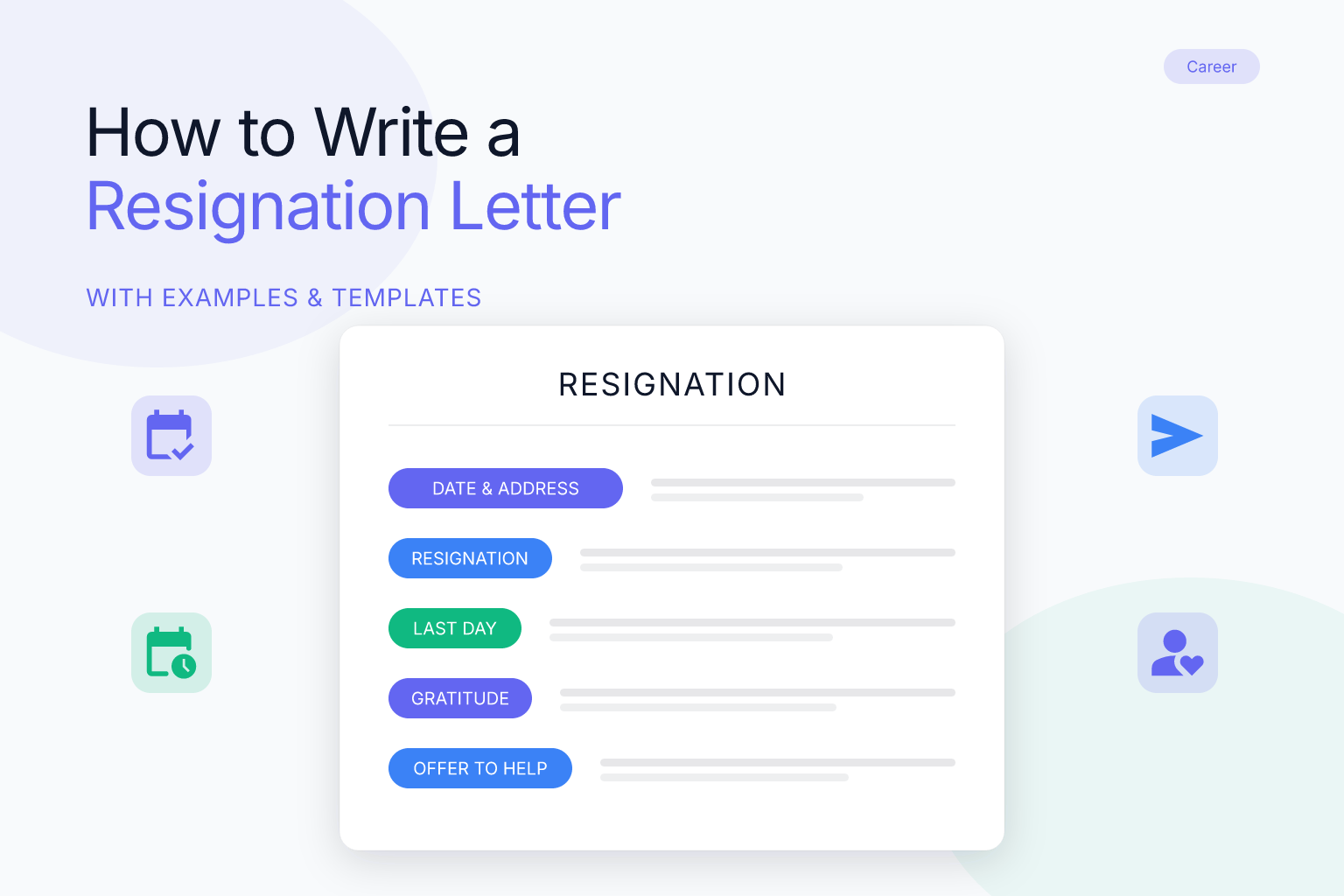
A resignation letter doesn’t need to be long. In most cases, three short paragraphs do the job. The goal is to communicate your decision, set a clear end date, and exit gracefully — nothing more.
Here’s the basic template:
Dear [Manager’s Name],
Please accept this letter as formal notification that I am resigning from my position as [Your Job Title] at [Company Name]. My last day will be [Date].
I appreciate the opportunities I’ve had during my time here, and I am grateful for the support and guidance you and the team have provided.
Over the next [notice period], I am happy to help with the transition in any way I can. Please let me know how I can assist in handing over my responsibilities.
Sincerely, [Your Name]
This works for most voluntary departures. The first sentence is the only legally essential part — it triggers your notice period. Everything else is about leaving on good terms.
What Is the Effective Date?
When writing a resignation letter, the effective date is simply your last day of work. It’s the date you’ll stop being an employee. You calculate it by adding your notice period to the day you hand in the letter. For example, if you give two weeks’ notice on a Monday, your effective date is the Friday two weeks later (or the date specified in your contract).
Always check your employment contract. Some roles require a month’s notice; others may have no formal requirement. If you’re unsure, ask HR before writing the letter. In the UK, statutory notice is at least one week if you’ve been employed for a month or more, but your contract may require longer.
When to Write and What to Include
Timing matters almost as much as wording. The best practice is to have a face-to-face conversation with your manager first, then follow up with the written letter. This keeps the relationship respectful and gives your manager a heads-up before HR receives the formal notice.
If a conversation isn’t possible — for example, you work remotely across time zones or the relationship is strained — send the letter via email and offer to discuss it by phone. The key is to avoid blindsiding anyone unnecessarily.
Write the letter once you’ve:
- Accepted a new job offer in writing (and passed any background checks, if applicable).
- Decided on a retirement date.
- Made a firm decision to leave, even without another role lined up.
Never submit a resignation letter on impulse. Once it’s in, you can’t take it back without your employer’s agreement. If you’re leaving because of a difficult situation, take a day to cool off before drafting anything.
What to Include
Beyond the basic template, a few details make the letter complete and professional.
1. A clear statement of resignation. Use direct language: “I am resigning” or “Please accept my resignation.” Avoid phrases like “I think it’s time for me to move on” — they create ambiguity.
2. Your last working day. This is the effective date. If you’re flexible, you can say “My last day will be [date], unless a different date works better for the transition.”
3. A brief expression of gratitude (optional but recommended). Even if you’re unhappy, a simple “I’ve appreciated the opportunity to work here” costs nothing and keeps the door open.
4. An offer to help with the handover. This shows professionalism. You might say, “I’m happy to train my replacement or document my current projects.”
5. Your contact details (if not on letterhead). Include your personal email and phone number so HR can reach you after you leave.
What to leave out:
- Complaints, grievances, or emotional language.
- Detailed reasons for leaving (a simple “pursuing a new opportunity” is enough).
- Criticism of colleagues or company policy.
- Demands or ultimatums.
If you have constructive feedback, save it for an exit interview — not the resignation letter. That document stays in your personnel file permanently.
Resignation Letter Examples for Every Situation
When You’re Unhappy
Leaving a job you dislike can feel liberating, but the resignation letter is not the place to unload. A scorched-earth letter might feel satisfying for five minutes, but it can follow you. Future employers sometimes check back with previous managers, and HR departments share information informally.
Instead, keep the letter short and neutral. You don’t owe an explanation. A two-sentence resignation is perfectly acceptable:
Dear [Manager’s Name],
Please accept this letter as formal notice of my resignation from [Company Name]. My last day will be [Date].
Sincerely, [Your Name]
If you want to add a touch of professionalism, include a generic thank-you: “Thank you for the opportunity to work here.” That’s it. No sarcasm, no backhanded compliments.
If you’re asked why you’re leaving during an exit interview, you can decide how honest to be. But the written record should remain clean. For help framing your departure in future interviews, read our guide on reasons for leaving a job and how to answer the question.
When Retiring
Retirement is a positive milestone, and your letter can reflect that. You’ve likely built long-standing relationships, so a warmer tone is appropriate. You can mention your years of service, express genuine gratitude, and even share a brief personal note about your plans.
Example:
Dear [Manager’s Name],
After [X] wonderful years at [Company Name], I am writing to announce my retirement. My last day will be [Date].
Working here has been one of the most rewarding chapters of my career. I am deeply grateful for the mentorship, camaraderie, and opportunities I’ve had. A special thank you to you and the team for making it such a positive experience.
I want to ensure a smooth transition. Please let me know how I can help train my successor or document ongoing projects in the coming [weeks/months].
I look forward to staying in touch and wish the company continued success.
Sincerely, [Your Name]
If you’re retiring early or leaving to pursue a passion project, you can mention it briefly — but keep the focus on gratitude and transition. This letter may be shared with colleagues, so it’s a chance to leave a lasting positive impression.
When Leaving on Bad Terms
Sometimes the situation is beyond repair — a hostile environment, a breach of trust, or a fundamental disagreement. You may feel angry, betrayed, or simply done. The resignation letter still needs to be professional, but it can be extremely brief.
A minimal version:
Dear [Manager’s Name],
I am resigning from my position at [Company Name], effective [Date].
Sincerely, [Your Name]
You don’t need to explain, justify, or accuse. If you have a legal claim or grievance, handle it through the proper channels — not the resignation letter. Anything you write can be used against you later, so stick to the facts.
If you’re leaving because of a toxic culture, you might also want to update your resume and start looking for a healthier environment. Our free AI resume builder can help you create a polished resume quickly, so you’re ready to apply as soon as you’re out.
With Immediate Effect
Resigning with immediate effect means your last day is today — or the day you hand in the letter. This is sometimes necessary due to personal emergencies, health issues, or an untenable work situation. However, it can burn bridges, so use it only when you have no other choice.
Your letter should state the immediate effective date clearly and, if you’re comfortable, give a brief, factual reason. You are not obligated to explain, but a short note can reduce speculation.
Example:
Dear [Manager’s Name],
Please accept this letter as my resignation from [Company Name], effective immediately. Due to unforeseen personal circumstances, I am unable to continue in my role.
I regret the abruptness of this departure and any inconvenience it causes. I am happy to provide a handover document via email if that would be helpful.
Sincerely, [Your Name]
If the reason is a serious breach by the employer — such as harassment or illegal activity — you may need to consult a legal professional before writing anything. In those cases, the letter should simply state your resignation and effective date, with no additional commentary.
UK and International Considerations
While the core principles are universal, UK employment practices have a few nuances worth noting.
Written notice is standard. In the UK, a verbal resignation can be legally valid, but most contracts require written notice. A resignation letter (or email) satisfies that requirement and creates a clear record.
Notice periods. If your contract doesn’t specify a notice period, statutory minimums apply: one week if you’ve been employed between one month and two years, and one week for each additional year up to a maximum of 12 weeks. Always check your contract first — many professional roles require one or three months.
Effective date. The effective date is the last day you work, which should align with your notice period. If you’re on garden leave (where you’re asked not to work during your notice but remain employed), your effective date is still the end of the notice period.
Holiday pay. In the UK, you’re entitled to be paid for any accrued but untaken statutory holiday. You don’t need to mention this in the letter, but it’s good to be aware of it when planning your final date.
Tone. UK workplace culture tends to value understatement and politeness. Even a brief resignation letter should include a courteous thank-you. The template at the start of this guide works perfectly for UK employers.
If you’re resigning from a role in another country, check local labor laws. The letter itself will look similar, but the notice period and entitlements may differ.
Common Mistakes to Avoid
Even a simple letter can go wrong if you’re not careful. Here are the most frequent missteps:
- Being vague about your last day. Without a clear date, HR can’t process your departure, and your notice period may not officially start. Always include a specific date.
- Using emotional or negative language. This includes passive-aggressive comments, complaints, or backhanded compliments. It never helps.
- Writing too much. A resignation letter is not a memoir. Three paragraphs max. If you want to say more, do it in person.
- Forgetting to sign and date the letter. If you’re printing it, sign it. If you’re emailing, your name in the body is fine, but include the date.
- Not keeping a copy. Forward a copy to your personal email or save it offline. You may need it for reference checks or unemployment claims.
- Resigning before you’re ready. Once submitted, you can’t un-resign without your employer’s agreement. Make sure you have a plan — whether that’s a new job, savings, or a clear next step.
If you’re leaving to start a new role, you’ll likely need an updated resume and possibly a cover letter. Our guide on how to write a career change cover letter can help if you’re pivoting industries, and the complete resume writing guide walks you through building a resume that gets interviews.
FAQ
Q: When should I write a resignation letter?
A: Write it after you’ve made a firm decision to leave and, ideally, after you’ve spoken with your manager. If you have a new job, wait until you’ve signed an offer and cleared any contingencies. The letter formalizes your notice and should be submitted on or just after the day you give verbal notice.
Q: When writing a resignation letter, what is the effective date?
A: The effective date is your last day of employment. It’s calculated by adding your notice period to the date you submit the letter. For example, if you give two weeks’ notice on June 1, your effective date is June 15. Always confirm your contractual notice period before setting the date.
Q: How do I write a resignation letter when I’m not happy?
A: Keep it short and neutral. State your resignation and last day, and add a minimal thank-you if you can. Avoid any negative or emotional language. The letter is a formal record, not a place to air grievances. Save detailed feedback for an exit interview or leave it unsaid.
Q: How do I write a resignation letter when retiring?
A: Use a warm, appreciative tone. Mention your years of service, express gratitude to colleagues and managers, and offer to help with the transition. You can briefly mention your retirement plans if you wish, but keep the focus on the positive experience and a smooth handover.
Q: How do I write a resignation letter when leaving on bad terms?
A: Use the most minimal format: state your resignation and effective date, and nothing else. You don’t owe an explanation, and anything you write could be used against you. If you have legal concerns, consult a professional before submitting anything.
Q: How do I write a resignation letter with immediate effect?
A: State that your resignation is effective immediately and give a brief, factual reason if you’re comfortable (e.g., personal circumstances). Acknowledge the abruptness and offer to provide a written handover if possible. Keep the tone professional despite the sudden departure.
Q: How do I write a resignation letter in the UK?
A: The format is the same as the standard template: clear resignation, last day, thank-you, and offer of transition help. Ensure your notice period complies with your contract or statutory minimums. UK employers expect a polite, written notice — email is widely accepted. No special phrasing is required beyond what’s covered in this guide.
Related articles:
- How to Explain a Layoff in a Cover Letter (With Examples)
- How to Read a Stock Option Grant Letter: A Beginner’s Guide
- How to Accept a Job Offer Email Template (With Examples)
- How to Write a Remote Job Cover Letter (With Examples)
- Data Analyst Cover Letter: How to Write (With Examples)
- How to Deal with a Difficult Coworker Interview Question
Track Every Application While You Job Hunt
Stop losing track of where you’ve applied. The ResumeMate Job Tracker is a free Chrome extension that tracks every application, deadline, and follow-up in one place — right from your browser.