Lunch Interview Etiquette and Tips: How to Ace a Meal Meeting
Lunch interview etiquette and tips can make or break your chances when a hiring manager invites you to a restaurant instead of a conference room. A meal interview isn’t just about your answers — it’s a test of your social skills, poise under pressure, and how you treat people when you’re not in a formal office setting. You’re being evaluated on everything from how you order to how you handle the check. This guide walks you through exactly what to do before, during, and after a lunch interview so you can focus on connecting with your interviewer and landing the job.
Key Takeaways
- A lunch interview is a social evaluation disguised as a meal — employers watch your manners, conversation style, and treatment of restaurant staff to gauge cultural fit.
- Order something easy to eat (no spaghetti, ribs, or messy burgers), match your interviewer’s price point, and avoid alcohol unless they order first and you keep it to one drink.
- Use the meal as a chance to build rapport, but keep the conversation professional — steer clear of controversial topics, complaints, or oversharing.
- Always send a thank-you email within 24 hours that references a specific moment from the lunch to reinforce your connection and interest.
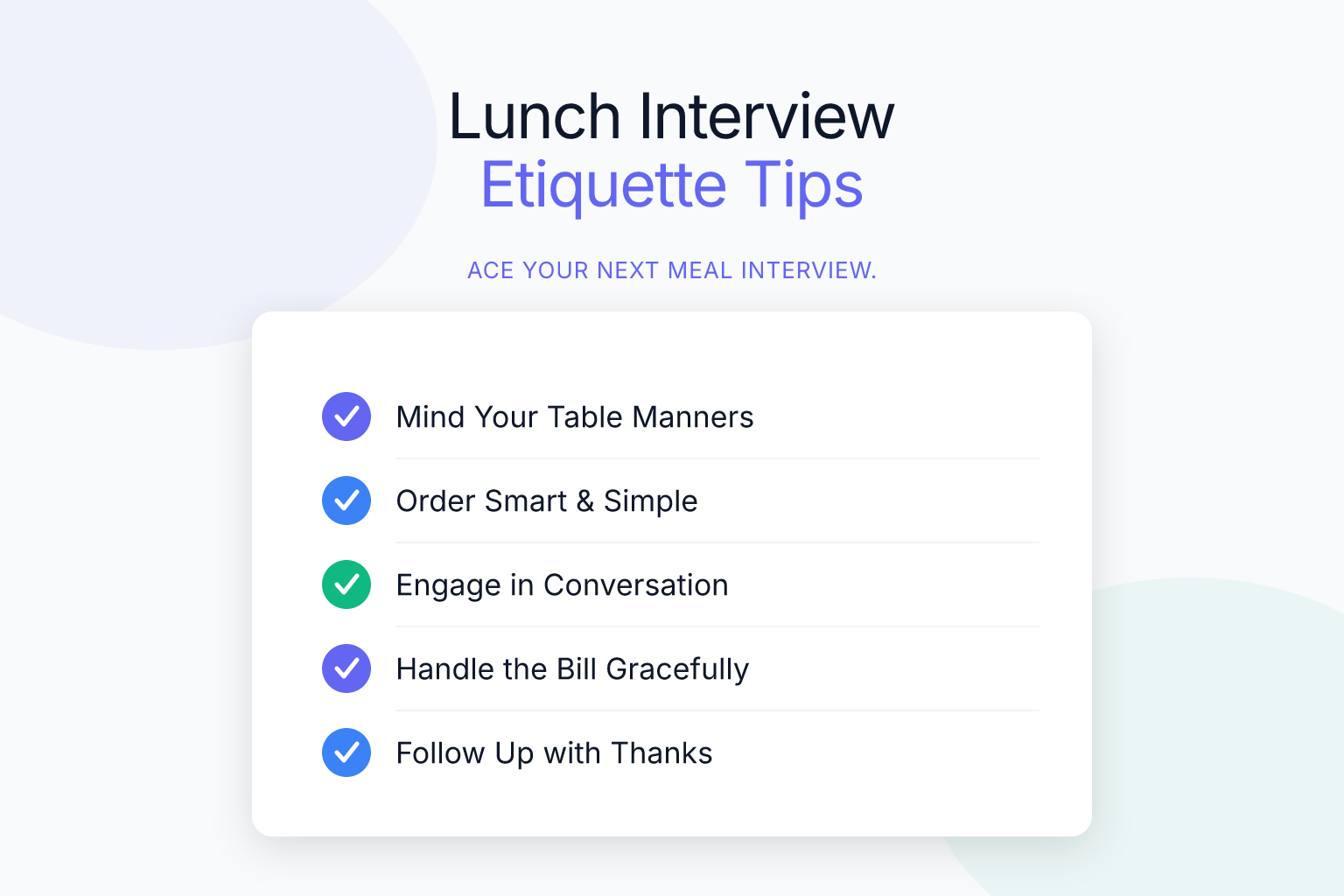
| What to Do | Why It Matters | Time |
|---|---|---|
| Research the restaurant and menu in advance | You’ll order confidently and avoid surprises | 15 minutes before the interview |
| Arrive 10–15 minutes early | Shows punctuality and gives you time to compose yourself | Day of interview |
| Follow the interviewer’s lead on ordering and pacing | Demonstrates social awareness and respect | During the meal |
| Send a personalized thank-you email | Keeps you top of mind and reinforces your professionalism | Within 24 hours |
Lunch Interview Etiquette and Tips: What to Expect When Dining with a Hiring Manager
A lunch interview is rarely about the food. Employers use this format to see how you behave in a less structured environment. The conversation may feel casual, but the stakes are just as high as a boardroom meeting. You’ll typically meet at a restaurant chosen by the interviewer — often a mid-range spot that’s quiet enough for conversation. The meal might last 45 to 90 minutes, and you’ll likely be joined by one or two decision-makers.
What’s being assessed? Your interpersonal skills, emotional intelligence, and ability to think on your feet while managing a meal. Spilling a drink or talking with your mouth full can overshadow a great resume. On the flip side, handling a minor mishap with grace can work in your favor. The key is to treat the lunch as an extension of the interview — not a break from it.
Before diving into specifics, remember that preparation is your best tool. If you haven’t already, review our complete guide to interview preparation to nail the fundamentals that apply to any interview format.
How to Prepare Before the Lunch Interview
Preparation for a lunch interview goes beyond rehearsing answers. You need to plan logistics, anticipate the menu, and set yourself up for a smooth experience.
Confirm the details. When the interviewer proposes a lunch, clarify the restaurant, time, and who will be attending. If they don’t specify, ask: “I’d love to look up the menu in advance — which restaurant are you thinking?” This shows initiative and helps you avoid a last-minute scramble.
Research the menu. Once you know the venue, study the menu online. Pick two or three options that are easy to eat and won’t distract you. Avoid anything that requires hands-on wrestling (tacos, ribs, whole lobster) or leaves you with garlic breath. A simple salad with protein, a grain bowl, or a piece of grilled fish or chicken are safe bets. Knowing what you’ll order eliminates decision paralysis at the table.
Dress the part. Even if the restaurant is casual, dress one notch above its typical attire. Business casual is almost always appropriate — a blazer over a neat top, or a dress with a cardigan. Avoid anything too flashy or uncomfortable. If you’re unsure, check out our advice on what to wear to an interview for more detailed guidance.
Pack a small bag with essentials. Bring a notepad and pen (you can jot down a question or two discreetly), mints (not gum), a stain remover pen, and a copy of your resume. Keep your phone on silent and out of sight.
Plan your route. Aim to arrive 10–15 minutes early. If you’re running late due to traffic or transit delays, call or text the interviewer immediately. Punctuality is non-negotiable.
What to Order (and What to Avoid)
Your order sends a message. It reveals your judgment, self-awareness, and ability to read a situation. Follow these guidelines to make the right impression.
Let the interviewer order first. This gives you a cue on price range and number of courses. If they order an appetizer, you can too; if they stick to a main, do the same. Never order the most expensive item on the menu, even if the interviewer encourages you to “get whatever you want.”
Choose food that’s easy to manage. You want to focus on conversation, not on cutting through a tough steak or fishing bones out of your mouth. Ideal choices:
- Grilled chicken or fish with vegetables
- Pasta with a simple sauce (avoid long noodles like linguine)
- Salads with chopped ingredients (skip whole lettuce leaves you have to fold)
- Grain bowls or risotto
Foods to avoid:
- Spaghetti, ramen, or any noodle dish that splatters
- Ribs, wings, or anything you eat with your hands
- Shellfish that requires cracking or peeling
- Overly crunchy or crumbly foods (hard-shell tacos, flaky pastries)
- Dishes heavy on garlic, onion, or strong spices
Drinks: proceed with caution. If the interviewer orders alcohol, you may have one drink — a glass of wine or a light beer. Limit yourself to one, and sip slowly. If they don’t order alcohol, stick to water, iced tea, or a soft drink. Never order a second drink, and never suggest a cocktail if the interviewer hasn’t. When in doubt, abstain entirely. No one ever lost a job offer for not drinking at lunch.
Handle dietary restrictions gracefully. If you have allergies or dietary needs, mention them briefly when ordering — no need to apologize or over-explain. “I’ll have the grilled salmon, but could you please hold the dairy?” is perfectly professional.
Navigating the Table: Utensils, Napkins, and Posture
Table manners are under a microscope during a lunch interview. You don’t need to be a finishing-school graduate, but basic etiquette signals respect and polish.
Napkin placement. As soon as you sit, place your napkin on your lap. If you need to leave the table, put it on your chair, not the table. At the end of the meal, place it loosely to the left of your plate.
Utensil use. Work from the outside in if multiple forks or spoons are set. Rest your knife and fork on the plate between bites — don’t wave them around while talking. When you’re finished, place them together diagonally across the plate (fork tines up or down, depending on local custom).
Posture and presence. Sit up straight, keep your elbows off the table while eating, and avoid slouching. Make eye contact when speaking and listening. Don’t check your phone, even if the interviewer does. If you need to take a quick note, use your notepad — never your phone.
Bread and butter. If bread is served, break off a small piece, butter it on your plate, and eat it. Don’t butter the whole roll at once.
Handling mishaps. If you spill something, apologize briefly and handle it calmly. Don’t make a big deal out of it. If food gets stuck in your teeth, excuse yourself to the restroom to fix it — don’t pick at the table.
Conversation Dos and Don’ts During the Meal
The conversation is the heart of the interview. The meal setting can make it feel more relaxed, but you must stay professional.
Do:
- Let the interviewer guide the balance of small talk and business talk. Some will dive right into questions; others will chat about hobbies or travel first.
- Ask thoughtful questions about the role, team, and company culture. This shows engagement.
- Listen actively. Nod, paraphrase, and ask follow-up questions.
- Share relevant anecdotes that highlight your skills, but keep them concise.
- Compliment the food or restaurant if it’s genuinely good — it’s a natural rapport-builder.
Don’t:
- Complain about anything — the food, the service, your previous job, the weather. Negativity is a red flag.
- Discuss salary, benefits, or vacation time unless the interviewer brings it up first.
- Overshare personal details. Keep stories light and professional.
- Interrupt or talk over the interviewer, even if you’re excited.
- Use your phone for anything. If you must take an emergency call, excuse yourself beforehand.
Navigating tricky topics. If the interviewer asks about a gap in your resume or a past conflict, answer honestly but frame it positively. For example: “That role taught me a lot about what I value in a work environment, which is why I’m so excited about this opportunity.” For more on handling tough questions, see our guide on stress interview questions and sample answers.
Pacing your eating. Take small bites so you can answer questions without a full mouth. It’s better to leave food on your plate than to rush through a question. If you’re asked something while chewing, hold up a finger briefly, finish, and then answer.
Handling the Bill and Tipping Gracefully
The bill moment can be awkward, but the rule is simple: the interviewer pays. They invited you, and this is a business expense. Don’t reach for the check or insist on splitting it.
What to do when the bill arrives:
- Let the interviewer pick it up. Don’t even glance at it.
- Say a sincere “Thank you so much for lunch. I really appreciate it.”
- If they ask if you want to split, you can offer once: “Are you sure? I’m happy to contribute.” If they decline, accept graciously.
Tipping. The interviewer will handle the tip. Don’t comment on the amount or try to leave cash. If you’re at a counter-service spot where you order and pay separately, the interviewer may still cover your meal — let them. If they don’t offer, pay for your own without fuss.
The exception. If you initiated the meeting (for example, an informational interview you requested), you should offer to pay. In that case, arrive early and give your card to the server discreetly, or insist on covering the bill. For more on that scenario, read our informational interview request email template and tips.
After the Meal: Follow-Up That Seals the Deal
Your lunch interview isn’t over when you walk out the door. The follow-up is where you reinforce the positive impression and keep the momentum going.
Send a thank-you email within 24 hours. A prompt, personalized note shows professionalism and enthusiasm. Reference a specific moment from the lunch — a story they shared, a topic you connected on, or a question you discussed. This proves you were engaged and makes your message memorable.
Example:
Subject: Thank you for lunch — great conversation about [topic]
Hi [Name],
Thank you again for lunch today. I really enjoyed hearing about [specific project or team initiative] and learning more about how your team approaches [challenge]. The [dish you both enjoyed] was a great pick, too.
Our conversation reinforced my excitement about the [Role] position, and I’m confident my experience in [skill] would help me contribute quickly. Please let me know if I can provide any additional information.
Best, [Your Name]
For more templates and timing advice, check out our collection of thank-you email templates after an interview.
What not to do:
- Don’t send a generic “thanks for your time” message.
- Don’t follow up multiple times in a week.
- Don’t connect on social media immediately unless the interviewer suggests it.
If you don’t hear back. Wait five to seven business days, then send a brief, polite follow-up. Reiterate your interest and ask if there’s any update on the hiring timeline. Keep it short and pressure-free.
Common Lunch Interview Mistakes to Avoid
Even strong candidates can sabotage themselves with small missteps. Here are the most frequent lunch interview blunders and how to steer clear.
1. Treating it like a social meal. It’s not a date or a catch-up with a friend. Keep the tone professional, even if the interviewer is casual. Avoid gossip, oversharing, or complaining.
2. Ordering the wrong food. The messiest, most expensive, or most complicated dish on the menu is a distraction. Stick to simple, manageable options.
3. Drinking too much. One drink is the absolute maximum. More than that and you risk slurred words, lowered inhibitions, or appearing unprofessional.
4. Forgetting basic manners. Chewing with your mouth open, talking with food in your mouth, or using your phone are instant deal-breakers for many hiring managers.
5. Arguing over the bill. Insisting on paying or splitting can create an awkward power struggle. Accept the interviewer’s hospitality with a simple thank-you.
6. Ignoring the staff. How you treat the server, host, or busser is being watched. Be polite, say please and thank you, and don’t snap your fingers or complain.
7. Skipping the thank-you note. Failing to follow up signals disinterest. A thoughtful email takes five minutes and can tip the scales in your favor.
8. Not preparing questions. A lunch interview is a two-way conversation. Have three to five thoughtful questions ready that show you’ve researched the company and role.
FAQ
Q: Should I order alcohol at a lunch interview?
A: Only if the interviewer orders first, and limit yourself to one drink. If they don’t order alcohol, stick to water, tea, or a soft drink. When in doubt, skip it — no candidate has ever been rejected for staying sober.
Q: What if I have dietary restrictions or food allergies?
A: Mention them briefly when ordering, without apology. For example, “I’ll have the salad, but could you leave off the cheese?” Most interviewers won’t think twice about it. If the restaurant can’t accommodate you, have a backup dish in mind.
Q: How do I handle a lunch interview if I’m a messy eater?
A: Choose the simplest dish on the menu — something you can cut easily and eat in small bites. Practice eating slowly and taking smaller portions. If you’re self-conscious, order a dish you’ve eaten before and know you can manage neatly.
Q: Is it okay to take leftovers home?
A: Generally, no. A lunch interview isn’t the time to ask for a doggy bag. It can appear overly casual or frugal. If the interviewer insists, you can accept, but don’t initiate the request.
Q: What if the interviewer asks a tough question while I’m chewing?
A: Hold up a finger briefly to signal you need a moment, finish chewing, and then answer. It’s far better to pause than to speak with food in your mouth. The interviewer will appreciate your composure.
Q: Can I use my phone to show something relevant during the interview?
A: Only if it’s directly related to the conversation and you’ve asked permission. For example, “I have a photo of that project on my phone — would you like to see it?” Otherwise, keep your phone out of sight.
Q: How long should a lunch interview last?
A: Typically 45 to 90 minutes. Let the interviewer set the pace. If they signal the end by asking for the check or mentioning their next meeting, wrap up your thoughts and thank them promptly.
Track Every Application While You Job Hunt
Stop losing track of where you’ve applied. The ResumeMate Job Tracker is a free Chrome extension that tracks every application, deadline, and follow-up in one place — right from your browser.