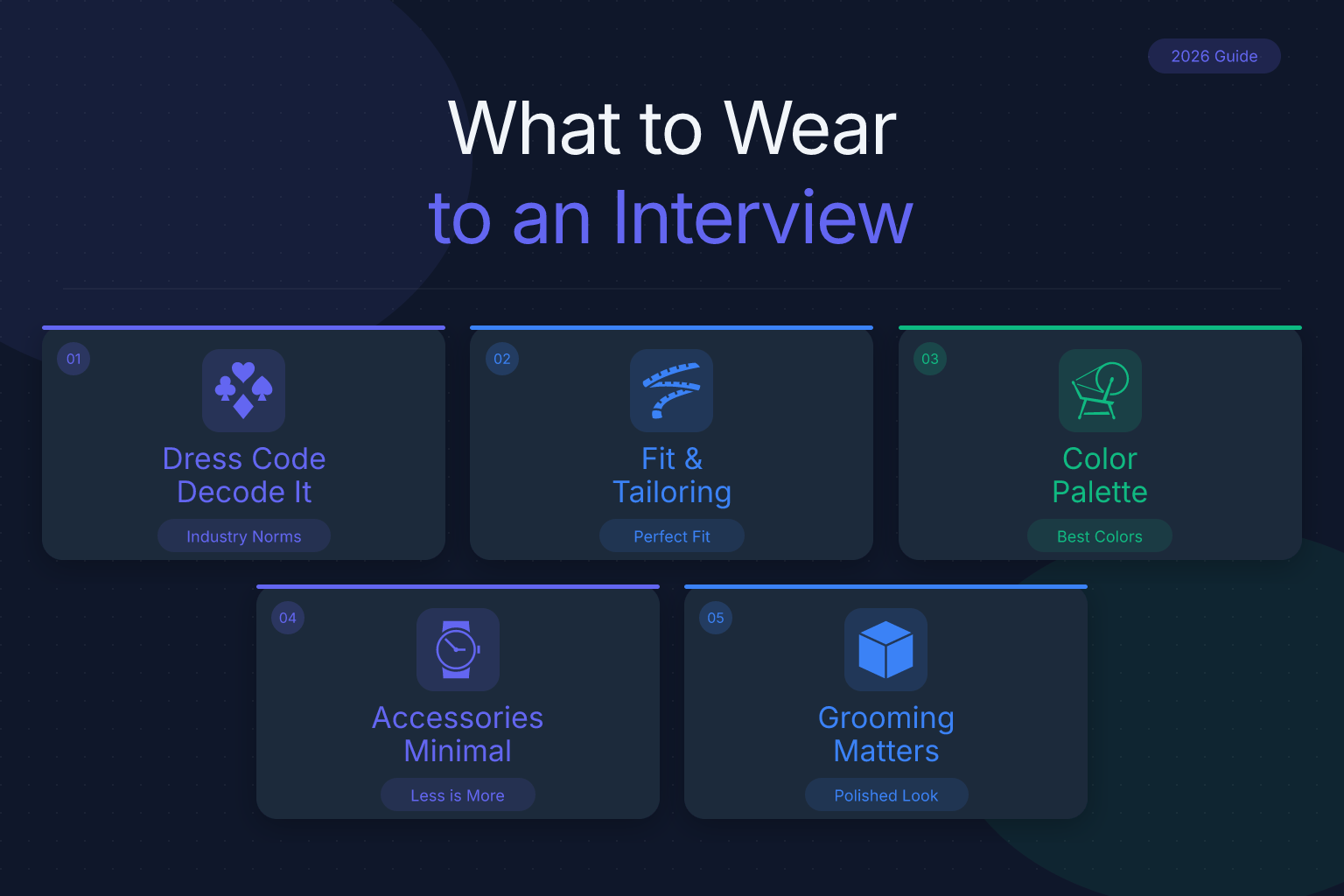
What to Wear to an Interview: A Complete Guide for 2026
Deciding what to wear to an interview can feel like a high-stakes puzzle. You want to look polished and professional, but you also don’t want to show up in a three-piece suit when the entire office wears jeans. The right outfit signals that you understand the company culture, respect the opportunity, and pay attention to detail — all before you say a single word.
This guide breaks down exactly how to choose interview attire for any industry, gender, or scenario. You’ll find specific outfit formulas, grooming tips, and a checklist to follow the morning of your interview.
| What to Do | Why It Matters | Time |
|---|---|---|
| Research the company’s dress code | Shows you fit the culture and did your homework | 15–30 min |
| Choose an outfit one level above the daily norm | Demonstrates respect without looking out of touch | 20 min |
| Prioritize fit and comfort over trends | You’ll move and speak more confidently | 10 min |
| Double-check grooming and details | Small flaws (scuffed shoes, wrinkled shirt) distract from your message | 10 min |
How to Decide What to Wear to an Interview in 2026
Before you open your closet, do a quick reconnaissance mission. The goal is to match the company’s vibe while erring on the side of slightly more formal. Here’s how to gather intel:
- Check the company’s social media and website. Look for team photos, office tour videos, or “life at [company]” posts. Are employees in blazers, button-downs, or hoodies?
- Ask your recruiter or HR contact. A simple “What’s the typical dress code for the office?” is perfectly acceptable and shows you’re thoughtful.
- Peek at LinkedIn profiles of current employees. If you see a pattern — say, everyone in a blazer for their headshot — that’s a clue.
- Consider the industry. Law firms, banks, and consulting firms still lean formal. Tech startups, creative agencies, and non-profits often embrace business casual or even casual.
Once you have a read, aim for one step above what employees wear daily. If the office is jeans-and-sneakers, wear chinos and a blazer. If it’s business casual (khakis and polos), go for dress pants and a blazer or a tailored dress. This rule keeps you safe without looking like you misread the room.
General Principles: Fit, Grooming, and Comfort
No matter what you choose, three factors make or break an interview outfit:
Fit
Clothes that are too tight, too loose, or too long distract both you and the interviewer. A blazer that pulls across the back or pants that pool at the ankle signal that you didn’t prepare. If you don’t own well-fitting interview clothes, budget time for tailoring — even a $20 hem adjustment transforms an outfit.
Grooming
- Hair: Clean and styled simply. Avoid drastic new cuts or colors right before the interview.
- Nails: Clean and trimmed. Chipped polish or dirt under nails is noticeable when you hand over a resume.
- Fragrance: Skip heavy perfume or cologne. Many offices are scent-free, and strong smells can trigger allergies or headaches.
- Shoes: Polished and scuff-free. Shoes are one of the first things interviewers notice subconsciously.
Comfort
If you can’t walk, sit, or breathe easily, you’ll fidget. Test your outfit: sit down, stand up, reach forward as if shaking hands. Make sure nothing rides up, gaps, or restricts movement. Comfort breeds confidence.
Interview Attire by Industry and Workplace Culture
Different fields have different unspoken dress codes. Here’s a cheat sheet:
Corporate / Formal (Finance, Law, Consulting, Government)
- Women: Tailored pantsuit or skirt suit in navy, charcoal, or black. Closed-toe pumps (2–3 inch heel max). Minimal jewelry.
- Men: Two-piece suit in navy or charcoal, white or light blue dress shirt, conservative tie, leather oxfords or derbies.
- Remote interview version: Wear the full suit — it affects your posture and mindset, even if only your top half shows on camera.
Business Casual (Marketing, Sales, Education, Mid-size Companies)
- Women: Blazer with dress pants or a knee-length sheath dress. Flats or low heels. A silk blouse or fine-knit sweater underneath.
- Men: Blazer or sport coat with chinos or dress trousers, button-down shirt (tie optional), leather loafers or brogues.
- Remote interview version: Blazer over a neat top; avoid loud patterns that pixelate on camera.
Creative / Startup Casual (Tech, Design, Media, Non-profits)
- Women: Dark jeans or tailored trousers with a polished top, a cardigan, or a casual blazer. Clean sneakers or ankle boots.
- Men: Dark jeans or chinos, a button-down or a high-quality plain tee under an unstructured blazer. Clean leather sneakers or desert boots.
- Remote interview version: A crisp shirt or sweater; avoid hoodies unless you’re 100% sure the culture expects it.
Trades and Hands-On Roles (Manufacturing, Culinary, Field Work)
- Dress practically but neatly. Clean, well-fitting work pants and a collared shirt. Steel-toe boots if the interview includes a site walk. The key is looking capable and safety-conscious.
What to Wear to an Interview: Women’s Attire
Women’s interview outfits range from full suits to smart casual, depending on the role. Build your outfit around these core pieces:
- The blazer: A single-breasted, well-tailored blazer in navy, black, or charcoal instantly elevates any outfit. Keep it buttoned for formal settings, open for casual.
- Tops: Silk blouses, fine-knit sweaters, or crisp button-downs. Avoid low necklines, sheer fabrics, or loud prints.
- Bottoms: Tailored trousers, a knee-length pencil skirt, or a sheath dress. For casual environments, dark-wash jeans with no rips or fading can work.
- Shoes: Closed-toe flats, low block heels, or loafers. Avoid stilettos, platforms, or anything you can’t walk confidently in.
- Accessories: One statement piece max — a watch, simple studs, or a delicate necklace. Skip jangling bracelets.
Example outfit for a corporate interview: Navy pantsuit, white silk blouse, nude pointed-toe flats, pearl studs. Example for a startup: Black jeans, a camel blazer, a grey cashmere sweater, white leather sneakers.
What to Wear to an Interview: Men’s Attire
Men’s interview clothing follows a similar spectrum. The foundation is a well-fitted jacket and clean shoes.
- Suits and blazers: A two-button suit in navy or charcoal is the gold standard for formal roles. For business casual, a blazer or sport coat with contrasting trousers works. Ensure the shoulder seams hit exactly at your shoulder edge and sleeves show ¼ inch of shirt cuff.
- Shirts: Solid white or light blue for formal; subtle stripes or checks for casual. Button-down collars are universally safe.
- Ties: When in doubt, wear one. Silk, solid or small pattern, no cartoon characters. The tip should reach your belt buckle.
- Pants: Dress trousers or chinos with a crease. No cargo pockets, no denim unless you’re certain the office is ultra-casual.
- Shoes: Oxfords, derbies, or loafers in black or brown, polished. Match your belt to your shoes.
- Grooming: Fresh haircut, trimmed nails, clean-shaven or neatly groomed facial hair.
Example outfit for a bank interview: Navy suit, white spread-collar shirt, burgundy tie, black oxfords. Example for a tech company: Grey chinos, navy unstructured blazer, light blue button-down (no tie), brown leather loafers.
Special Scenarios: Teenagers, Casual Dress Codes, and Cultural Contexts
What to Wear to an Interview as a Teenager
For a first job or internship, you don’t need a suit. Aim for neat, age-appropriate, and slightly more formal than everyday wear.
- Teen girl: Dark jeans or khakis, a blouse or a nice sweater, flats or clean sneakers. A simple dress with a cardigan also works.
- Teen guy: Chinos or dark jeans, a collared shirt (polo or button-down), and clean sneakers or loafers. Tuck in the shirt.
- Avoid: Graphic tees, ripped jeans, shorts, flip-flops, heavy makeup, or overly trendy pieces.
What to Wear to a “Casual” Interview
When the employer explicitly says “dress casually,” don’t take it literally. They still expect you to look put-together. Interpret “casual” as “smart casual”: dark jeans or chinos, a neat top, and clean shoes. No sweatpants, no athleisure, no wrinkled t-shirts.
What to Wear to an Interview in India (Women)
In India, interview attire blends Western formality with traditional options, depending on the sector.
- Corporate/MNC: Western business formals — trousers with a formal shirt and blazer, or a knee-length sheath dress. Salwar kameez in subtle colors with a dupatta is also widely accepted.
- Traditional preference: A cotton or silk saree in a muted shade, paired with a well-fitted blouse, is considered highly professional in many Indian offices.
- Startups/creative: Kurtis with leggings or palazzos, or smart casual Western wear.
- Key details: Avoid sleeveless unless layered, keep jewelry minimal, and choose closed-toe shoes.
What Not to Wear to an Interview
Some items almost never work, regardless of industry:
- Athleisure: Yoga pants, sweatpants, gym shorts, hoodies.
- Overly casual footwear: Flip-flops, worn-out sneakers, slippers.
- Revealing clothing: Low-cut tops, mini skirts, sheer fabrics, exposed midriffs.
- Loud patterns or logos: Busy prints, brand logos, political slogans.
- Wrinkled or stained clothes: Iron everything. Check for deodorant marks, pet hair, and loose threads.
- Too much fragrance or makeup: Keep it subtle.
- Hats or sunglasses indoors: Remove them before entering the building.
Final Checklist Before You Walk Out the Door
- Outfit is clean, pressed, and fits well
- Shoes are polished and appropriate for the role
- Nails, hair, and facial hair are neat
- Fragrance is light or absent
- Bag or portfolio is organized, not overstuffed
- Phone is silenced
- You’ve done a sit-stand-reach test
- You have copies of your resume in a clean folder
While your outfit makes the first impression, your answers seal the deal. Practice the STAR method to structure your responses, and make sure you’re ready for the classic opener with our guide on how to answer “Tell me about yourself”. After the interview, a thoughtful follow-up keeps you top of mind — here’s how to write a thank-you email that stands out.
FAQ
Q: What to wear to an interview female?
A: For most professional roles, a tailored blazer with dress pants or a knee-length sheath dress is a safe, polished choice. In creative or casual settings, dark jeans with a blouse and blazer work well. Always choose closed-toe shoes and minimal jewelry.
Q: What to wear to an interview women?
A: Women’s interview attire spans suits to smart casual. The key is to research the company culture and dress one level above the daily norm. A navy blazer, silk blouse, and tailored trousers is a versatile formula that fits most industries.
Q: What to wear to an interview female casual?
A: “Casual” for an interview still means neat and intentional. Opt for dark-wash jeans without rips, a fine-knit sweater or blouse, and a casual blazer or cardigan. Clean white sneakers or ankle boots complete the look. Avoid t-shirts, hoodies, and distressed denim.
Q: What to wear to an interview male?
A: Men should default to a suit or blazer with dress trousers for formal roles, and chinos with a button-down and sport coat for business casual. In tech or creative fields, dark jeans with a blazer and clean leather shoes is appropriate. Always match your belt to your shoes.
Q: What to wear to an interview female in India?
A: In India, both Western and traditional attire are acceptable. For corporate roles, trousers with a formal shirt and blazer or a subtle salwar kameez with dupatta work well. A muted saree is also highly professional. In startups, kurtis with leggings or smart casual Western wear are common.
Q: What to wear to an interview teenager?
A: Teenagers should aim for neat, age-appropriate clothing one step above everyday wear. For girls, dark jeans or khakis with a blouse or sweater and flats. For guys, chinos or dark jeans with a collared shirt and clean sneakers. Avoid graphic tees, ripped jeans, and flip-flops.
Q: What to wear to an interview teenager girl?
A: A teenage girl can wear dark jeans or a knee-length skirt with a nice blouse, sweater, or button-down. Flats or clean sneakers are fine. A simple dress with a cardigan is another easy option. Keep makeup and jewelry minimal, and avoid anything too trendy or revealing.
Related articles:
- Who to Ask for Professional References: A Complete Guide
- LinkedIn Featured Section: What to Add (2026 Guide)
- How to Research a Company Before an Interview
- How to Set Up Lighting for a Video Interview at Home
- Solved a Problem: Interview Answer Guide (Examples)
- Content Writer Portfolio: What to Include (Complete Guide)
- Lunch Interview Etiquette: Tips to Ace a Meal Meeting
- Prepare for an Informational Interview: Step-by-Step Guide
- Resume for Returning to Work After Raising Children: A Guide
- What Contact Information to Include on a Resume (2025 Guide)
- No Response After Interview Follow-Up? Here’s What to Do
- What Are Your Weaknesses? How to Answer in an Interview
- Is CRM a Good Career? (2026 Guide)
- Job Interview Statistics: Key Data and Trends for 2026
- Questions to Ask an Interviewer: 30+ Smart Questions
- Tips to Prepare for an Interview: A Complete Guide
Track Every Application While You Job Hunt
Stop losing track of where you’ve applied. The ResumeMate Job Tracker is a free Chrome extension that tracks every application, deadline, and follow-up in one place — right from your browser.